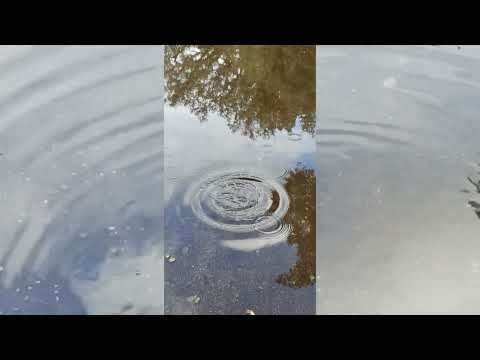
A live performance at the Manetti Shrem Museum of Art, UC Davis, created by students in African American Studies 152: Major Voices in Black World Literature, taught in the museum's galleries by Professor Margaret Laurena Kemp, chair of the Department of Theatre and Dance, during the 2025 run of Breath(e): Toward Climate and Social Justice. Through a multimodal curriculum, students read Tina Campt's Listening to Images, Claudia Rankine's Don't Let Me Be Lonely, and LaToya Ruby Frazier's Flint Is Family in Three Acts, which documents the Flint water crisis, and explored writing, singing, and dance with Professor Bhumi Patel, using breathwork as a way of staying grounded while engaging climate and social justice. The course culminated in a public performance in the galleries alongside Frazier's photographs, a meditation on breath, identity, resistance, and the power of listening that wove poetry, movement, and voice to confront injustice and affirm resilience, agency, and spirit. Students' responses were also added to the exhibition as a soundscape visitors could reach by QR code, and the museum documented the project in a short video.
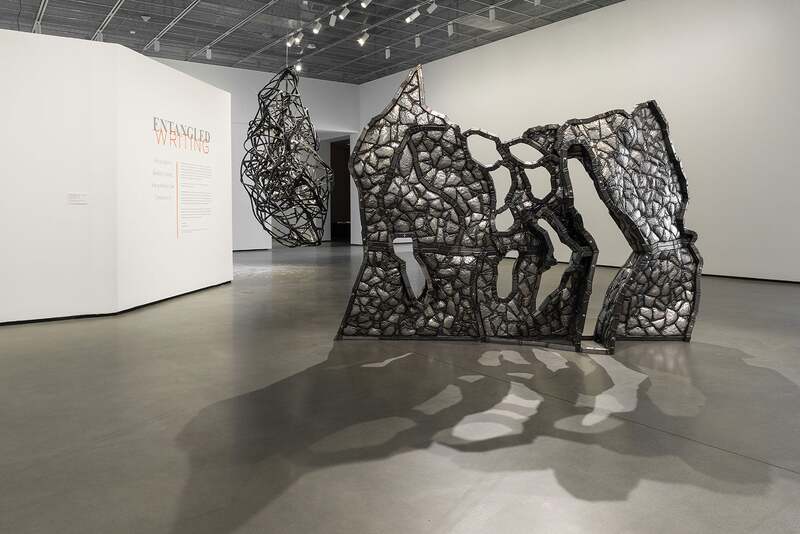
A large steel sculpture by Beatriz Cortez, associate professor of art at UC Davis, commissioned for the exhibition Entangled Writing (August 8 – December 29, 2024) at the Manetti Shrem Museum of Art, curated by Susie Kantor. Measuring twelve by eighteen feet, the work belongs to Cortez's exploration of life across different times and possible futures, drawing on whaling history, icebergs, and a volcanic eruption in El Salvador; its title names Hansbukta, a bay on Svalbard in the Norwegian Arctic. The exhibition grew from early conversations between Cortez and Los Angeles artist Phillip Byrne, and in the galleries her sculpture stood in conversation with his Before We Become Spirals, made from salvaged transoceanic cable casings, asking viewers to consider what humans leave behind.
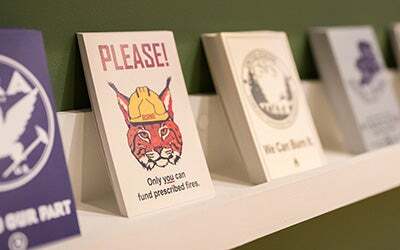
An exhibition at the Manetti Shrem Museum of Art, UC Davis, on how fire and fire stewardship could reshape California's landscapes. It was created by UC Davis landscape architecture and environmental design professors Brett Milligan and Emily Schlickman and grew from their book Design by Fire: Resistance, Co-Creation, and Retreat in the Pyrocene (2023). Built in collaboration with artists and ecologists, it gathered images and objects on the history of wildfire in the western United States, including firefighting helmets and burnt objects, a projected video of prescribed burns, and a large glass case staging three possible fire futures, ranging from Indigenous land stewardship and cultural burning reshaping the U.S. Forest Service to worsening megafires if emissions go unchecked. Visitors pinned their homes on a large map of high fire-risk zones, shared their own experiences of wildfire in journals, and took home fire-themed postcards proposing alternatives to Smokey Bear, among them Burnie the Bobcat, a mascot who would light good fires rather than fight them. A billboard on Interstate 80 between Sacramento and Davis carried the message “Only you can decide our fiery future,” and an online journal at pyrofutures.com extended the conversation beyond the museum.
A major exhibition at the Hammer Museum, UCLA, that centered environmental art addressing the climate crisis and human-caused disasters, and their inescapable intersection with equity and social justice. Curated by artist Glenn Kaino and guest curator Mika Yoshitake, with PST fellow Jennifer Buonocore-Nedrelow, it brought together more than 100 works by 25 intergenerational artists working in photography, multimedia, augmented reality, painting, living organisms, and more, and filled most of the Hammer's galleries and outdoor spaces. Conceived during the COVID-19 pandemic and the racial reckoning of 2020, the exhibition drew on ancestral Indigenous knowledge that treats all elements of nature as one family rather than as resources for human use.
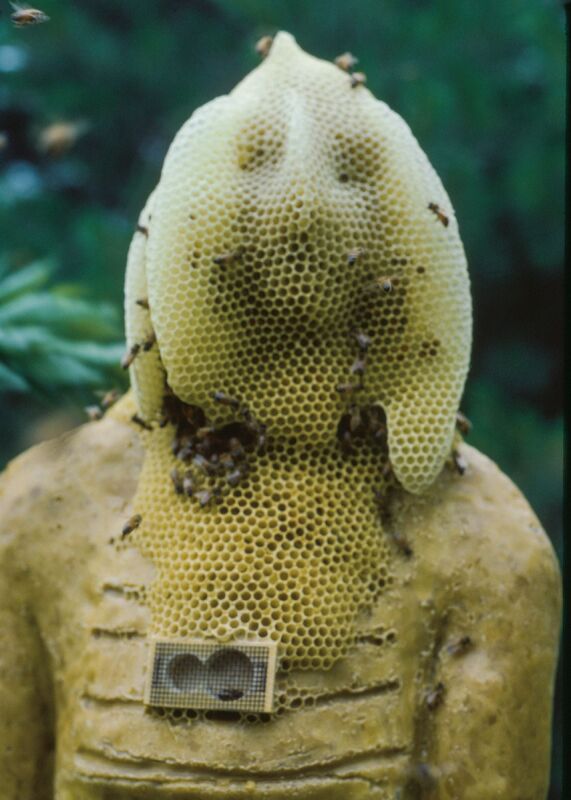
New commissions included Cannupa Hanska Luger's multi-part installation Sovereign, a Garnett Puett Apisculpture made in collaboration with a living bee colony, Lan Tuazon's outdoor installation built from plastic waste donated by visitors, Ron Finley's garden installation Grounded, and Mel Chin's IOV (Interpretation of Vision), developed from stories gathered through an open call. Other works traced the slow violence of environmental harm, from LaToya Ruby Frazier's photographs of the Flint water crisis to Tiffany Chung's architectural models of climate displacement in Vietnam. Part of Getty's PST ART: Art & Science Collide and presented in partnership with Conservation International, the exhibition was also documented as a Getty case study in measuring and reducing an exhibition's carbon footprint. After its Los Angeles presentation, the exhibition traveled to the Moody Center for the Arts at Rice University in Houston and to the Jan Shrem and Maria Manetti Shrem Museum of Art at UC Davis (August 7 – November 29, 2025), where a version with fourteen of the artists hosted UC Davis classes in the galleries, including a course whose students created the performance Breath, Soil, Water, Life in response to LaToya Ruby Frazier's Flint is Family in Three Acts.
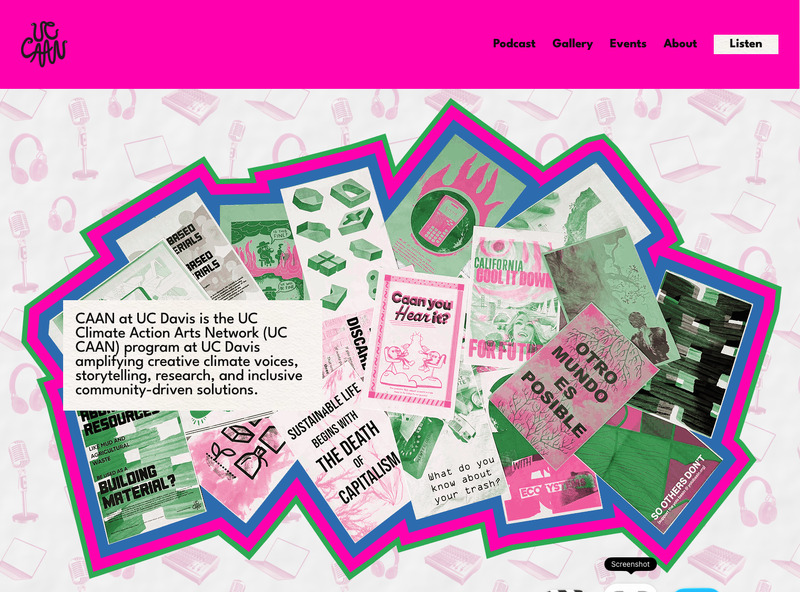
The UC Davis node of the UC Climate Action Arts Network supports creative research at the intersection of art, climate action, and community resilience. Its projects include CAAN You Hear It?, a podcast featuring designers and other creatives working on the front lines of climate action, with a focus on inclusive storytelling and diverse perspectives.
Scholars, students, artists, and community groups work together through this UC Davis program on media arts projects that strengthen communities and inform regional decisions. Its pilot project, Up from the Understory, worked with youth and adults in the Blue Mountain area of Calaveras County. Together they documented a Sierra Nevada foothill community’s history of boom-and-bust resource extraction and its efforts toward sustainable renewal. Later projects include Restore/Restory, Passion for the Land, and Youth Voices for Change.
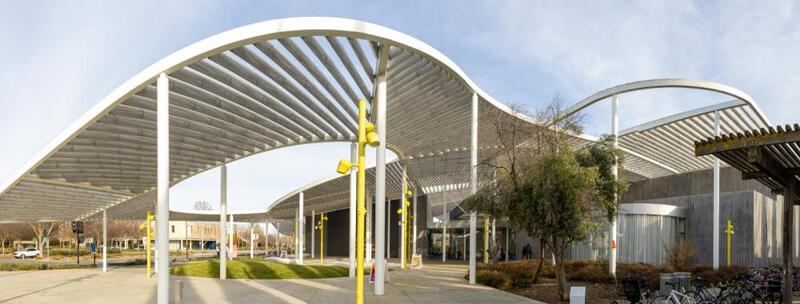
Since opening in 2016, this free-admission museum at UC Davis has put contemporary art in direct conversation with university research. Its exhibitions and programs have featured artists working on identity, migration, environment, and material innovation.
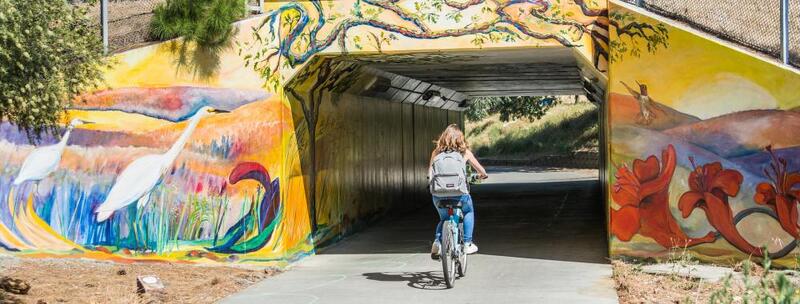
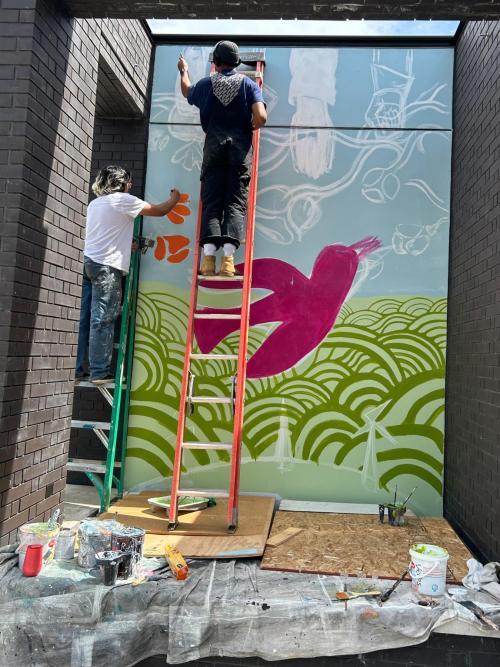
Through art-based partnerships, this UC Davis Institute of the Environment program supports student research and learning on environmental issues and climate change. Its California Climate Art Trail is a series of murals made with students, youth groups, educators, farmers, and agricultural partners. The murals show how climate change affects agricultural communities and how those communities are responding.
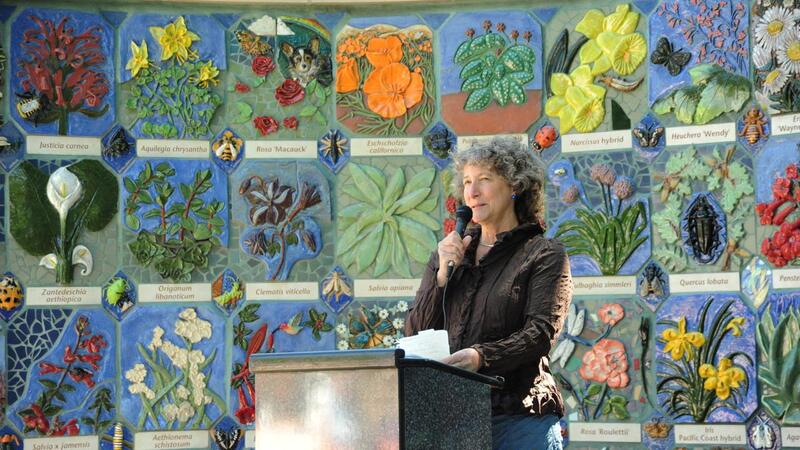
Students learn science through hands-on art-making in this UC Davis program, working in ceramics, painting, textiles, photography, songwriting, and more. It grew out of Entomology 1: Art, Science and the World of Insects, a course launched in 2000 by entomologist Diane Ullman and ceramicist Donna Billick, who now co-direct the program. Housed in the Science and Society Program, it serves UC Davis students, K–12 students, and community members, often in partnership with the UC Davis Arboretum.
Offered by Diane Ullman in partnership with Donna Billick. This course explores the exciting world of insects with a focus on those biological components that make them an evolutionary success and a constant in human technology, culture, architecture, literature, film and religion.
Students explore these topics in a richly layered learning environment in which they create and learn with a high degree of self-initiative and collaborative interaction. Interactive lectures (2 hours/week) convey concepts and factual information and students are asked to create art from this learning experience in studios (3 hours, 1 time/week) that focus on ceramics, textile surface design and graphic communication. Student projects frequently include large-scale public installations in the UC Davis Arboretum and campus buildings that are aimed at extending student learning to the public and creating accessibility to the academic enterprise and life-long learning opportunities.