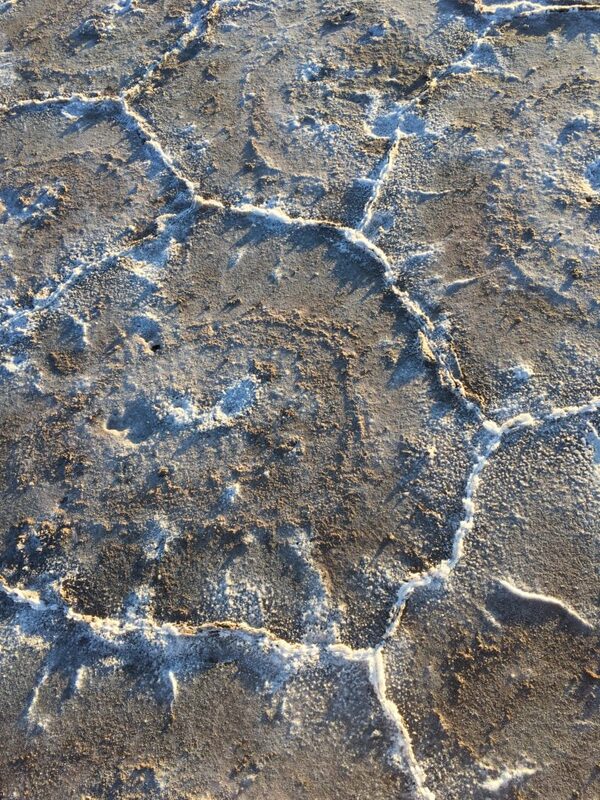
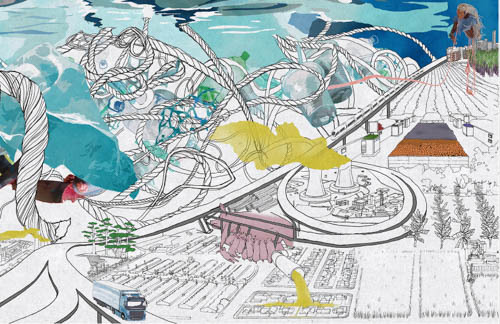
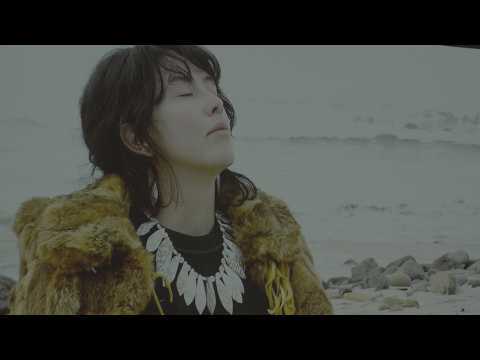
A long-term art research project that has worked since 2017 in the industrialized high-altitude deserts of northern Chile's Atacama. There, copper and lithium mining for global supply chains reshapes a former seabed with rare geologic and living systems. Drawing on intensive fieldwork, the artists build multichannel sound, video, photography, live audiovisual performance and installation, and use mirage and perceptual distortion rather than documentary to question the idea of the desert as wasteland. They also note that the region has served as a Mars-analog test site. Works include Salar: Evaporation (2020), shown in the group exhibition Against Outer Space at UC Irvine's Beall Center for Art + Technology, and Salar: Adaptation, presented at the Santa Cruz Museum of Art & History in 2024. A feature film and an artist book are in progress.
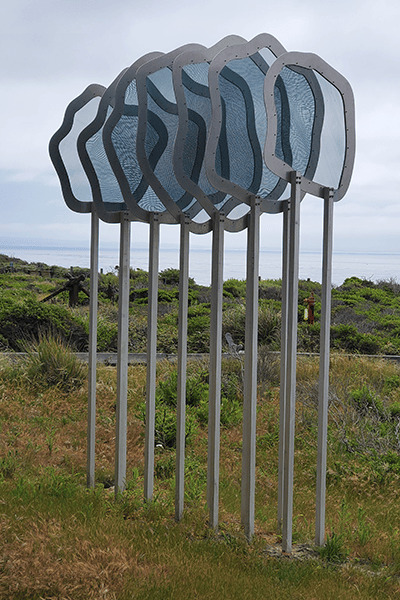
A public sculpture and working fog catcher made of eight amorphous, cloud-like rings, each strung with copper mesh that weathers to a sky-blue color. Coastal fog condenses on the mesh, and the water drips into the soil below to nourish the surrounding wetland plantings. The sculpture was made by artist Anja Ulfeldt for UC Santa Cruz's Art+Fog Collective, and microbiologist and environmental toxicologist Peter Weiss-Penzias tested the water it gathered. It was installed in December 2024 in the marshlands around Younger Lagoon, just west of the Seymour Marine Discovery Center, as part of restoration efforts there.
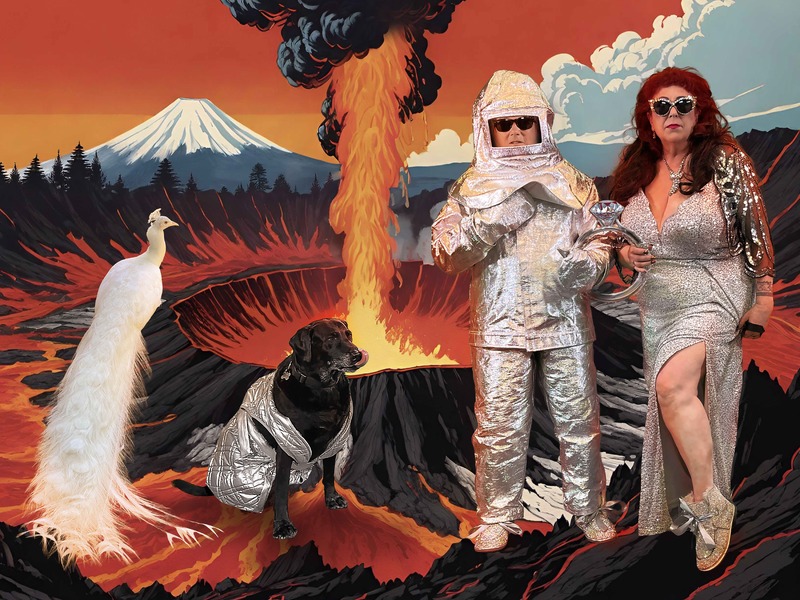
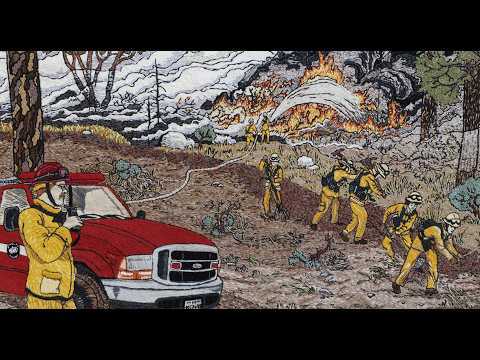
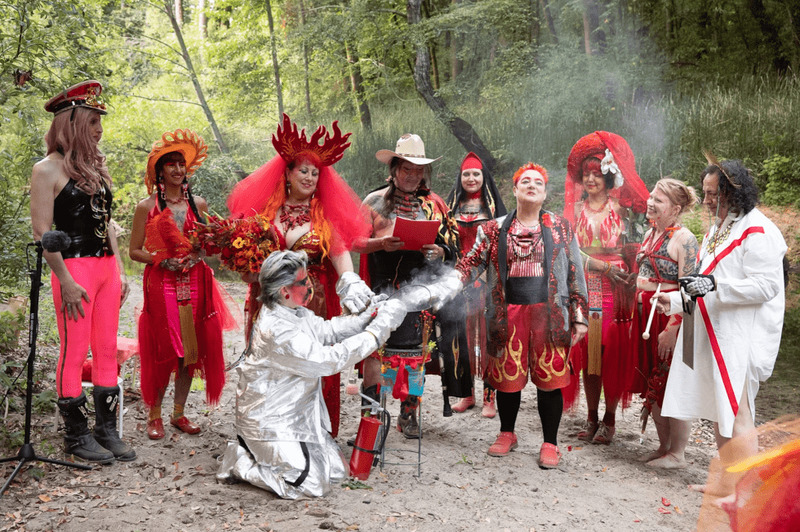
A 71-minute documentary that begins when the 2020 CZU Lightning Complex fires force Annie Sprinkle and Beth Stephens to evacuate their home in the Boulder Creek redwoods. From there, the artists approach fire as an element to relate to and care for rather than only fight. Mixing humor, grief and performance art, the film draws on firefighters (including formerly incarcerated firefighters), Indigenous scholars, ecologists, artists and a witch therapist, and part of the narration is voiced by a mythical white peacock named Albert. It connects California's wildfires and climate change to questions of social justice and ends with a ceremonial wedding to fire in the redwoods. It is the third film in the pair's ecosexual series, after Goodbye Gauley Mountain (2014) and Water Makes Us Wet (2019). It premiered at Frameline49 at the Roxie Theater in San Francisco on June 20, 2025.
A group exhibition that treated apocalypse as something many communities have already lived through, by way of colonialism, displacement and genocide, rather than as a coming event. It brought together artists whose work traces the roots of present social and environmental injustice and imagines just, ecologically sustainable alternatives. Works included Amy Balkin's People's Archive of Sinking and Melting, Teddy Cruz and Fonna Forman's video proposal for a cross-border environmental commons at the Tijuana River estuary, Laurie Palmer's solar-powered discussion table Public Sun / Arendt's Table, and Newton Harrison's maps of Mediterranean pollution. The exhibition was guest curated by T. J. Demos at the Santa Cruz Museum of Art & History. It was the culminating exhibition of UC Santa Cruz's year-long, Mellon-funded Beyond the End of the World project, organized with The Humanities Institute and the Center for Creative Ecologies.
A free, interactive online atlas that traces the ecologies that arise when nonhuman beings become entangled with human infrastructures, which its editors argue are the substance of the Anthropocene. Readers move through the atlas along routes of "detonators," "tippers" and "feral qualities." Along the way they find nearly 80 field reports by scientists and humanists alongside video, artwork, poetry and music, as well as a reading room and curriculum suggestions. The project was curated and edited by UC Santa Cruz anthropologist Anna Tsing with Jennifer Deger, Alder Keleman Saxena and Feifei Zhou, and published as a digital book by Stanford University Press. ArtReview ranked it 15th on its 2020 Power 100 list.
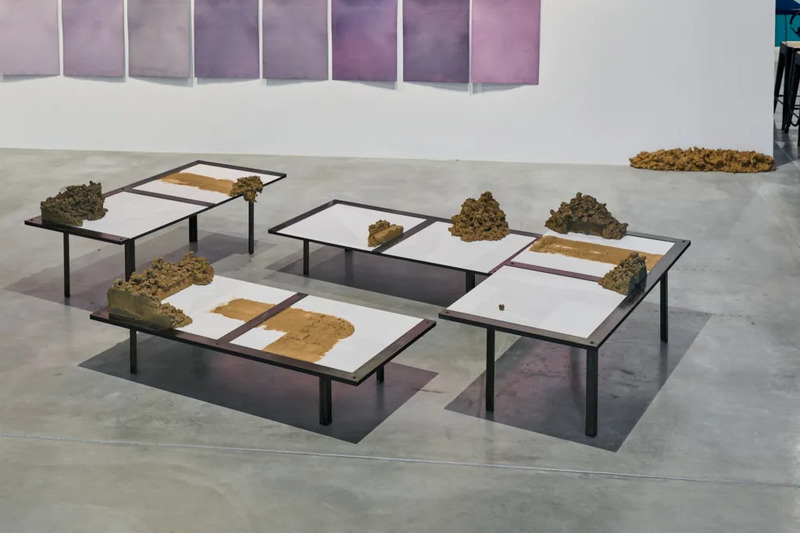
Mounds and rivulets of adobe spread across sheets of paper laid in archival flat files, made by Christine Howard Sandoval, a member of the Chalon Indian Nation. Set out like an archive, the earth asks what records of land and memory can hold. Shown in Weather and the Whale at the Institute of the Arts and Sciences, UC Santa Cruz, alongside her The First Color Is Red.
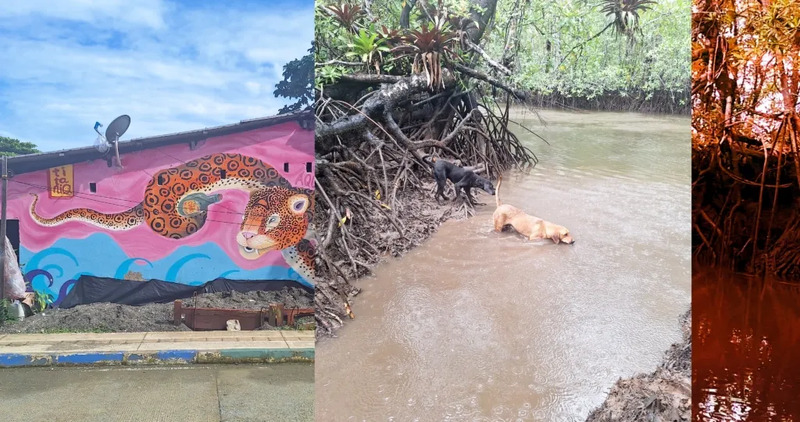
A video by Suné Woods made after her 2024 visit to Coquí, on Colombia’s Gulf of Tribugá, where she observed humpback whale biopsies alongside marine ecologist Dr. Natalia Botero-Acosta. Centering the Afro-Colombian and Indigenous knowledge of the region, the work asks what it means to learn from other species. Shown in Weather and the Whale at the Institute of the Arts and Sciences, UC Santa Cruz.
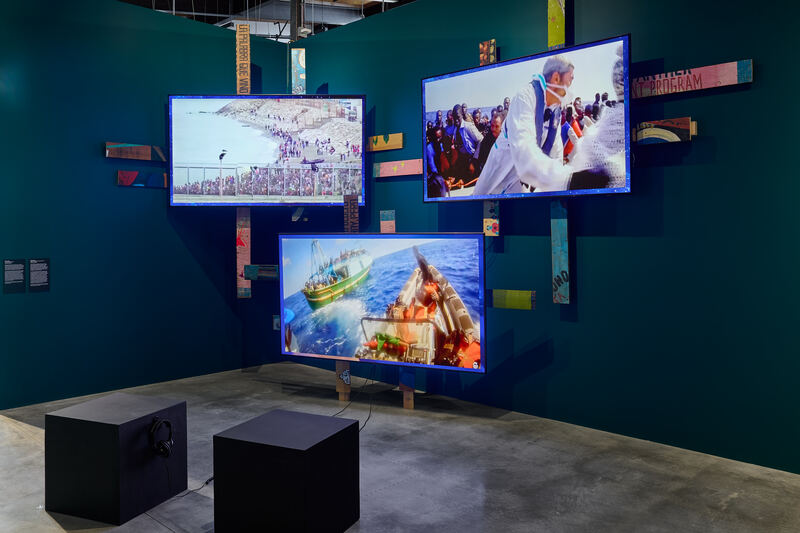
A triptych video installation by Mia Eve Rollow that layers new footage, archival images, and news media around the tides and the symbolic life of the sea across cultures to explore ocean ecologies. One passage follows a whale fall, the carcass of a whale sustaining deep-sea life. Shown in Weather and the Whale at the Institute of the Arts and Sciences, UC Santa Cruz.
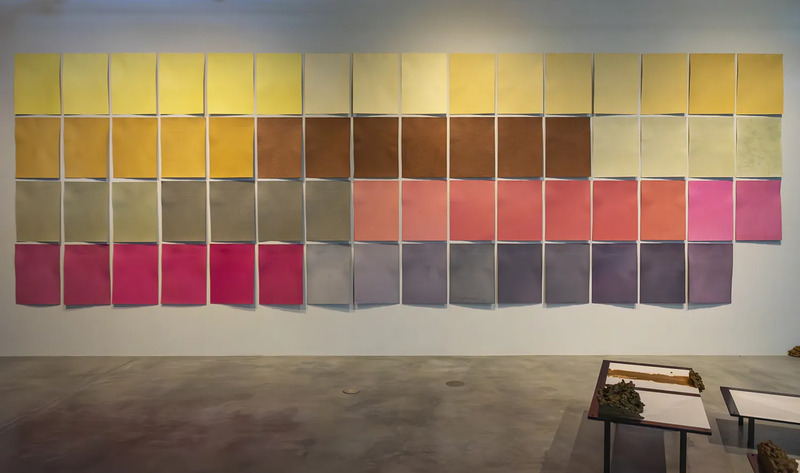
Sixty-three pages of hand-dyed paper by Christine Howard Sandoval, a member of the Chalon Indian Nation, blind-embossed with faint phrases in her Chalon Ohlone ancestral language. Rising across the wall in bands of color, the pages touch on plant medicine, Indigenous knowledge, and the harms of colonization. Shown in Weather and the Whale at the Institute of the Arts and Sciences, UC Santa Cruz, alongside her Fourth Person Singular.
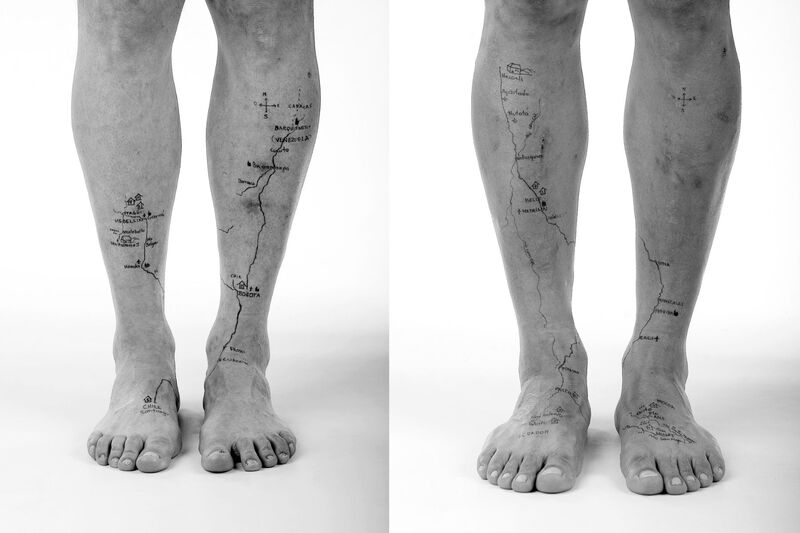
Photographs of the legs and feet of displaced women in Medellín, Colombia, by Colombian artist and physician Libia Posada, each marked with an inked map of the journey that took the woman from her home. The maps trade compass points for right and left and measure distance in strides, recording displacement as it is carried in the body. Posada first exhibited Signos Cardinales in 2009; this version was shown in Weather and the Whale at the Institute of the Arts and Sciences, UC Santa Cruz.
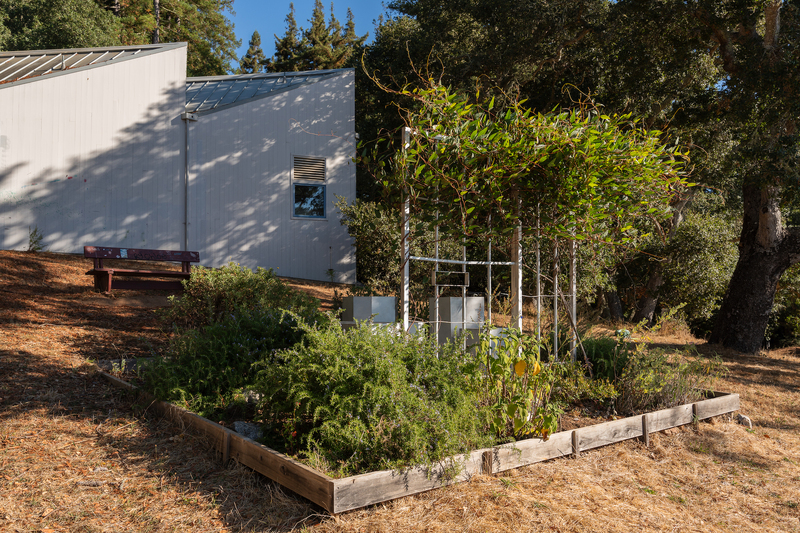
A garden built within the footprint of a solitary confinement cell and planted at the Institute of the Arts and Sciences, UC Santa Cruz, by artist and prison abolitionist Jackie Sumell in collaboration with Tim Young. Part of Sumell’s Solitary Gardens project and the IAS Visualizing Abolition initiative, the work turns the architecture of isolation into a space of growth and care.
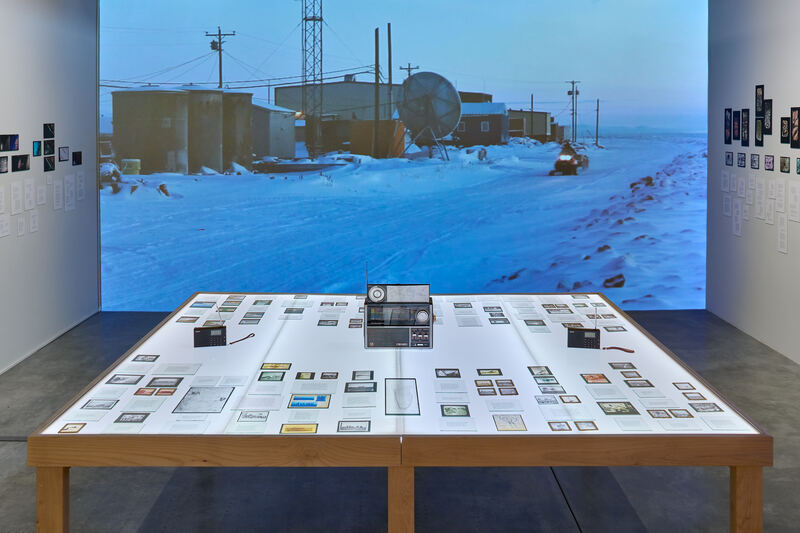
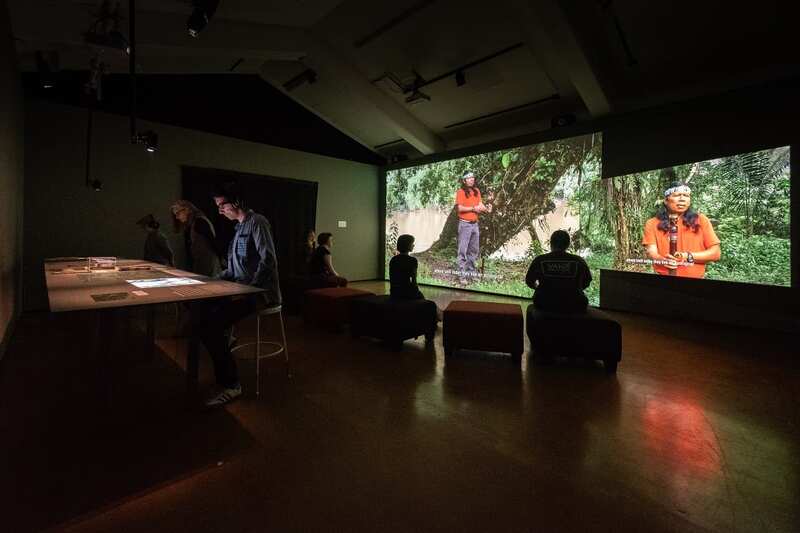
A multimedia installation by Sharon Daniel that traces the climate crisis as lived in Kivalina, an Iñupiat village on a barrier island in northwest Alaska, through oral testimonies, archival images, and ice core scans. A long lit table holds photographs, documents, timelines, and a vintage radio beneath a wall-sized image of the village. Shown in Weather and the Whale at the Institute of the Arts and Sciences, UC Santa Cruz.
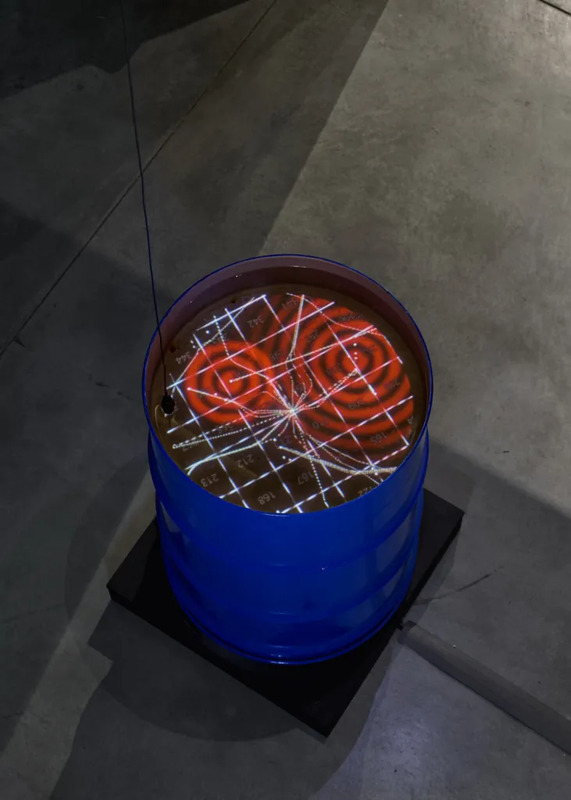
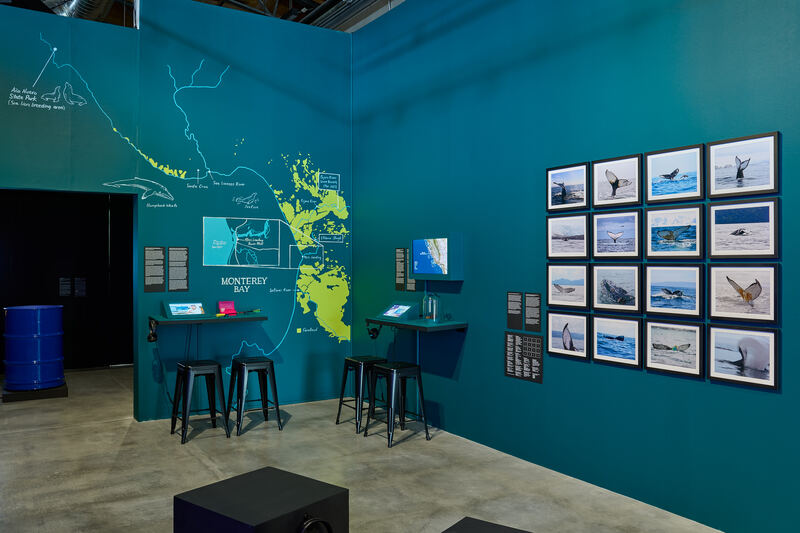
A sound and video installation by the Whale Liberation Front, the collective of Imani Jacqueline Brown, Cory Diane, and Peter J. Bowling, that imagines how whales in the Gulf of Mexico experience the seismic airgun blasts used to search for oil and gas. Water fills an inverted oil drum with images playing across its surface and a hydrophone hanging above it, beside a hand-painted map of the Gulf marked with alternative place names. Members of the collective also performed a live electroacoustic piece with zither, synthesizers, voice, water, and rare recordings of Gulf whale song at the Institute of the Arts and Sciences, UC Santa Cruz.
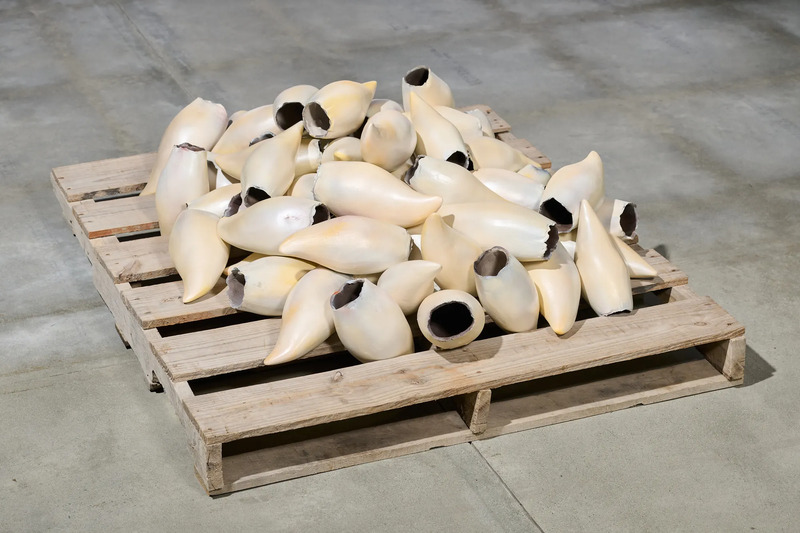
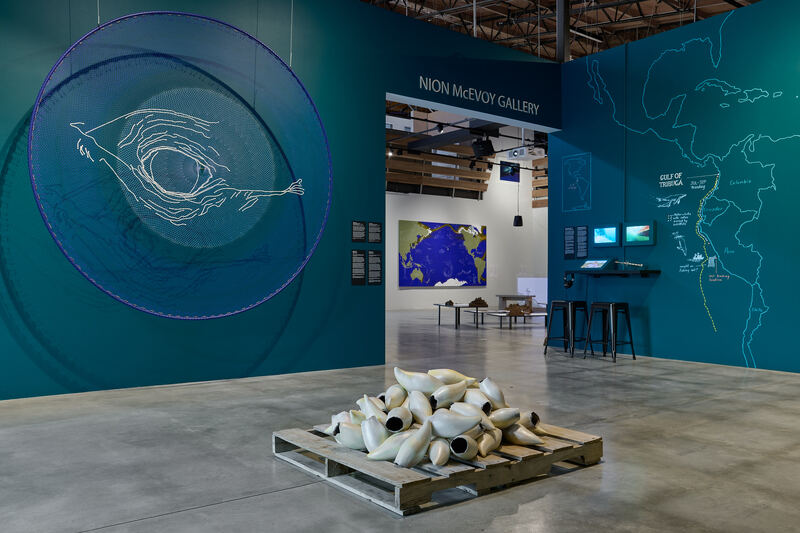
Sixty ceramic sperm whale teeth heaped on a wooden shipping pallet, part of the BREACH series that Shinnecock artist Courtney M. Leonard began in 2014 to explore the many meanings of the word breach. Shown in Weather and the Whale at the Institute of the Arts and Sciences, UC Santa Cruz, the work questions US environmental policy and economics and points to the role of industrial shipping in whale deaths.
A handmade fishing net embroidered with the eye of a humpback whale, made by artist Carolina Caycedo for Weather and the Whale at the Institute of the Arts and Sciences, UC Santa Cruz. The net turns the whale’s gaze back on the viewer, pointing to how commercial fishing gear entangles and kills whales while honoring small-scale subsistence fishing as a more sustainable way of living with the sea.
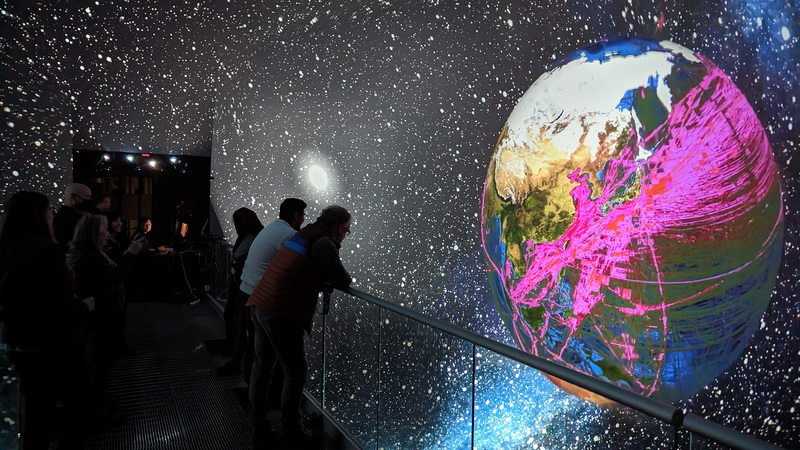
An immersive installation built from core elements of Sensorium for the World Ocean, the long-term project of the late environmental artist Newton Harrison (1932–2022), directed by Joshua Harrison with Dr. JoAnn Kuchera-Morin. It premiered in 2024 at the AlloSphere, a three-story spherical research instrument in the California NanoSystems Institute at UC Santa Barbara, as a satellite to the UC Irvine Beall Center's Getty PST ART exhibition Future Tense: Art, Complexity, and Uncertainty, and ran by reservation into April 2025. With an original spatialized composition and an interactive data world, it turns climate and ocean-health data from the Ocean Health Index of the Halpern Lab at UCSB's Bren School of Environmental Science & Management into a multisensory experience, modeling how deepwater fishing, atmospheric particulates, weather, and other natural and human forces interact to shape the ocean, along with the political, economic, and social pressures upon it. True to Harrison's intent, it aims to leave audiences with a sense of hope. A project of the Center for the Study of the Force Majeure with Virtual Planet Technologies, Almost Human Media, and the AlloSphere Research Group.
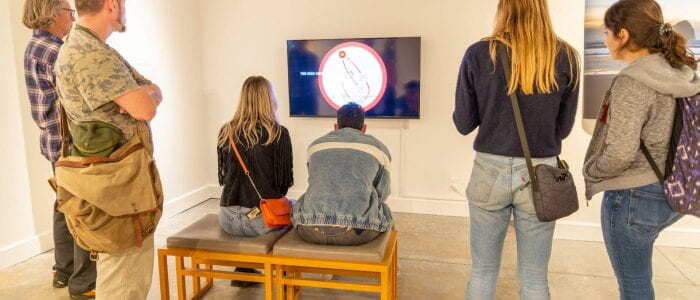
A major exhibition at the Institute of the Arts and Sciences, UC Santa Cruz, that brought internationally acclaimed artists into collaboration with marine ecologists at the Friedlaender Lab. Its title reflects how both weather and whales act as indicators of climate change. Presented across the institute's three galleries and screening room, the exhibition paired new research and data from two years of Friedlaender Lab fieldwork, much of it made public for the first time, with video installations, sculpture, photography, and other works, most of them newly commissioned. The research traces how environmental toxins, sea ice retreat, and other threats affect whales and other large marine mammals, including in Monterey Bay and along California's coast. Together, the science and the artworks explore human and nonhuman experiences of the climate crisis and imagine climate justice across land and ocean. The participating scientists were Natalia Botero Acosta, Ari Friedlaender, Chloe Lew, and Logan Pallin. Organized as part of An Aesthetics of Resilience and funded by a University of California Office of the President California Climate Action Seed Grant, with additional support from the Coha Nowark Art + Science Fund, the exhibition was accompanied by the public program series Intersections of Climate Change, study guides, and a catalog.
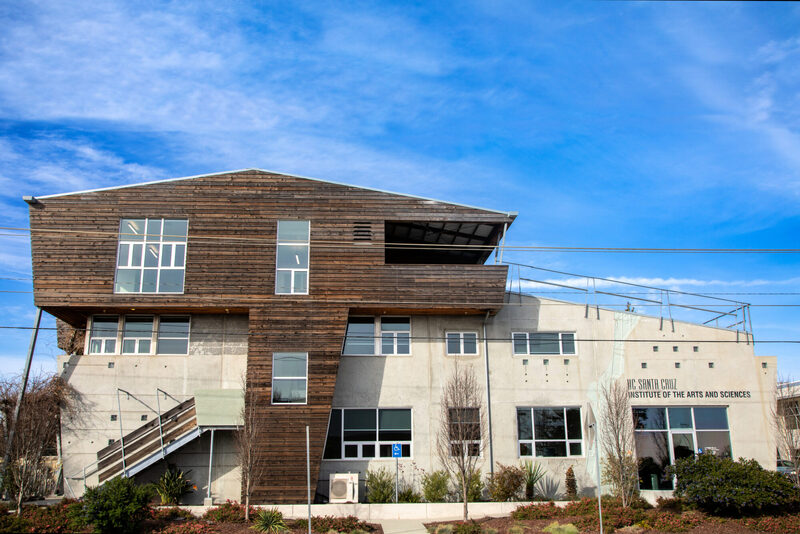
A university art and research center at UC Santa Cruz that uses exhibitions, research, and public programs to engage the critical issues of the present, bringing the arts together with the sciences, social sciences, and humanities. Founded in 2014 to expand the visual arts at UC Santa Cruz, it opened the university's first professional, climate-controlled galleries on the Westside of Santa Cruz in 2023 under director and chief curator Rachel Nelson. Its Art + Science programs focus on climate resilience. Chief among them is An Aesthetics of Resilience, a research initiative with the Friedlaender Lab that brings scientists, artists, humanists, and activists together to examine vulnerability in the face of climate change, and that produced the exhibition and catalog Weather and the Whale (2025–26). Other programs include Visualizing Abolition, LASER Talks, the Coha Nowark Art + Science Pilot Residency, graduate student fellowships, and paid undergraduate internships.
A research center in the Department of History of Art and Visual Culture at UC Santa Cruz that considers the intersection of culture and environment. Founded and directed by art historian T. J. Demos, it studies how artists, filmmakers, photojournalists, architects, writers, and activists critically address and creatively negotiate climate change, extraction, habitat destruction, and environmental injustice. Drawing on visual culture, political ecology, Earth jurisprudence, Indigenous cosmopolitics, and climate justice activism, the center supports the department's PhD program in Visual Culture and hosts symposia, exhibitions, a reading group, an online journal, and public conversations. Its programs include the Mellon-funded Sawyer Seminar Beyond the End of the World (2019–21), the exhibition Forest Law by Ursula Biemann and Paulo Tavares at the Mary Porter Sesnon Art Gallery (2018), and the online seminar Nuclear Nows: Contemporary Art, Radiation, and Militarized Ecologies (2024).
An international, transdisciplinary collective of artists, scientists, designers, and scholars that invites the public to engage with algae, from the microscopic to the planetary scale. Launched in 2018, the lab approaches algae as companion species, vital to climate resilience and atmospheric balance, and works through artworks, workshops, writing, and exhibitions that cultivate multispecies kinship. Most of its founding members were UC Santa Cruz graduate students who worked with Jennifer Parker in the OpenLab Collaborative Research Center. More than 100 artists, scientists, and scholars on three continents have taken part, with core members at UC Santa Cruz, the University of North Carolina Wilmington, Universidad Complutense de Madrid, Reed College, RMIT University, the University of the Sunshine Coast, and the University of Gothenburg. Exhibitions include CONFLUENCE: Experimentation | Installation | Collaboration at the Cameron Art Museum in Wilmington, North Carolina (2022), with further projects at the MOXI Museum in Santa Barbara and the Madrid Planetarium.
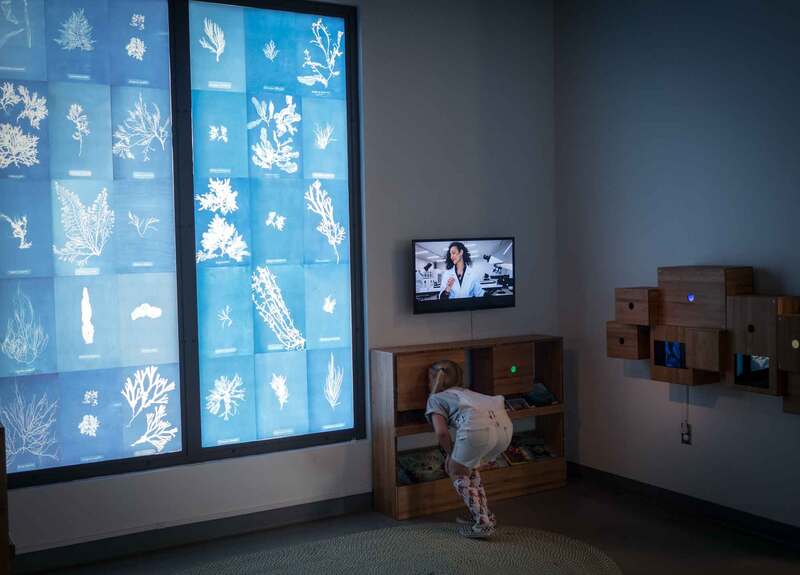
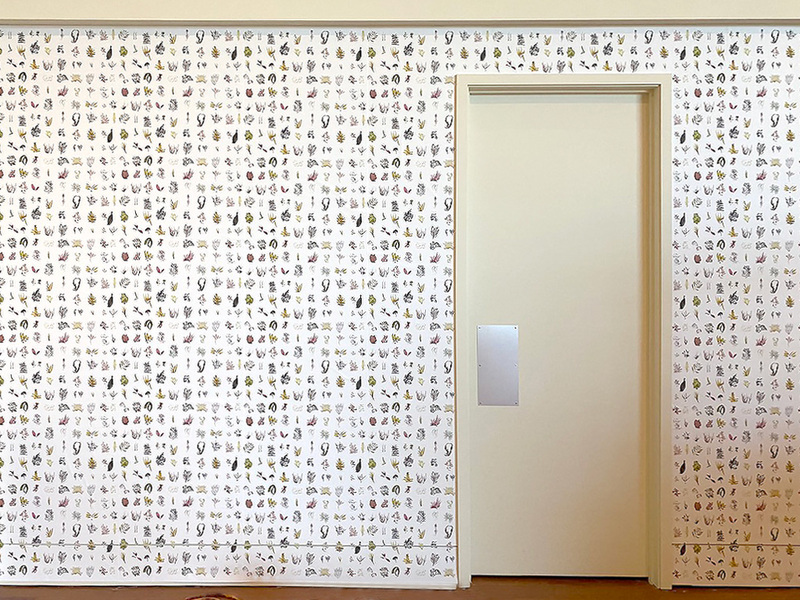
A wallpaper pattern built from a sample of seaweeds and kelp gathered over 100 years and held in the Algae Collection at the University of California, Santa Barbara. Marine algae oxygenate the ocean, create habitat for other organisms, and anchor a vast marine food web; repeated across a wall, a century of collected specimens becomes an immersive record of coastal life and of the scientific care that preserved it. Digital print on archival paper, made in 2022 through The Algae Society Bio Art & Design Lab, with support from Anya Chytrowski, the UCSC Arts Research Institute, and the OpenLab Collaborative Research Center. The wallpaper was shown in CONFLUENCE: Experimentation | Installation | Collaboration at the Cameron Art Museum, Wilmington, North Carolina (January 28 – April 24, 2022) and Seymour Discovery Center at UC Santa Cruz (April – October 2026).
Cross-campus teams developing solutions for coastal climate resilience receive support from this UC Santa Cruz center. Project leads come from the Arts, Humanities, Social Sciences, Engineering, and Physical & Biological Sciences. The center backs both projects ready to scale and pilots testing new ideas.
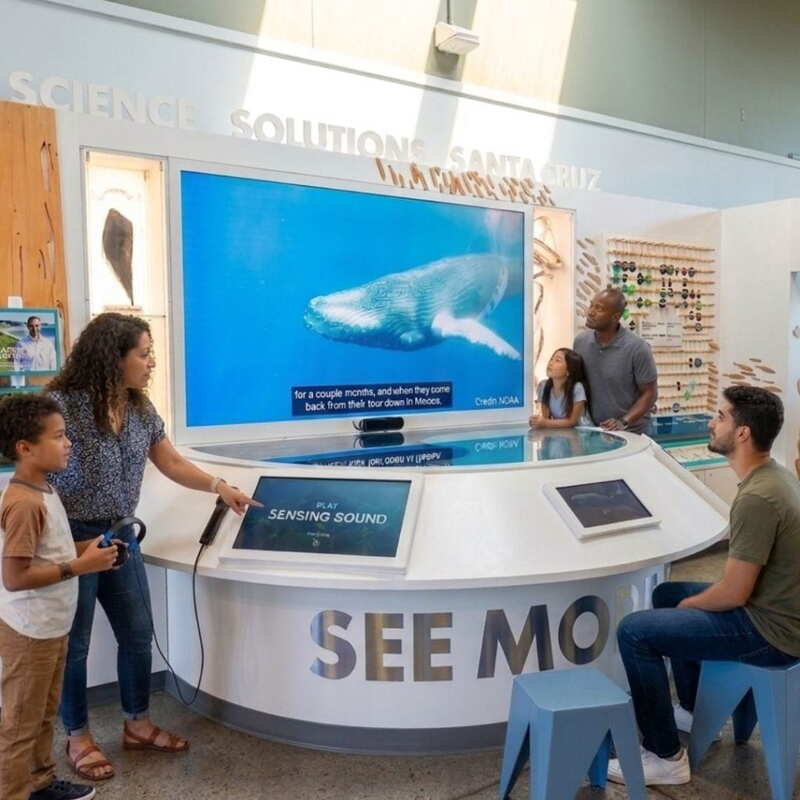
Exhibits, school field trips, youth programs, internships, and volunteer opportunities on Monterey Bay show visitors how ocean research informs the understanding and conservation of marine life. The center is the public face of UC Santa Cruz’s Long Marine Laboratory.
Natural history collections, field courses, and internships anchor this UC Santa Cruz center’s work with students, faculty, staff, and the wider Santa Cruz community. It builds connections across disciplines, especially between art and science.
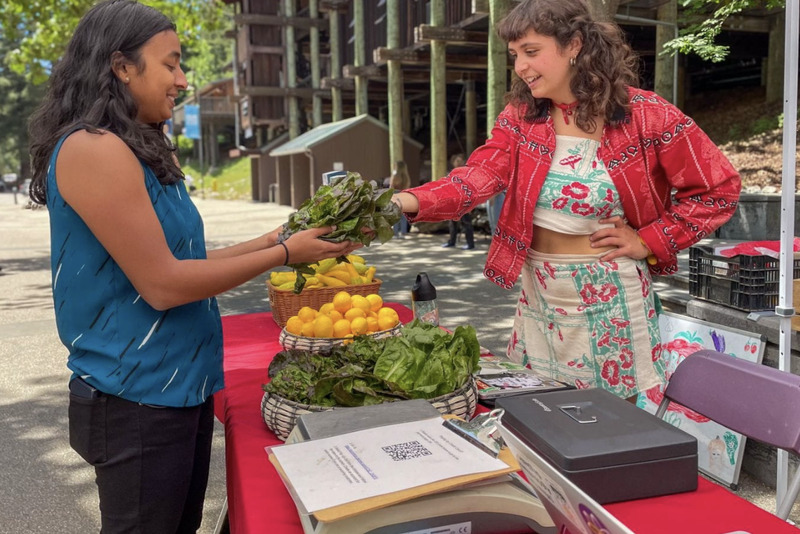
For more than 50 years, students, apprentices, and community members have learned organic growing at the Alan Chadwick Garden (founded 1967) and the UCSC Farm (founded 1971), both managed by this UC Santa Cruz center. Its broader mission is to advance agroecology and equitable food systems through education, participatory research, extension, and public service. That work includes support for small farmers and for student access to affordable organic food.
Artists whose work engages California’s changing landscape are hosted through this UC Santa Cruz research initiative’s artist-in-residence program. In partnership with the UC Natural Reserve System and UCSC’s Norris Center, it supports new work and connects artists with public programs.
Shifting attention from machines toward people and ecosystems, this faculty-led center at UC Santa Cruz brings the arts, sciences, and technology together through research, exhibitions, talks, and events. Its projects ask how technology can serve the public good and address the planetary costs of unsustainable innovation.
Since the early 2000s, this institute has supported faculty research and creative practice in UC Santa Cruz’s Arts Division, funding and hosting exhibitions, performances, publications, symposia, field research, and public engagement. It was established under Dean Edward Houghton and led in its early years by Music Professor Leta Miller. It now serves as home to the division’s research centers and initiatives.
Rachel Berger's recorded research talk featuring prompts that encourage uncommon reflections on the past, present, and possible futures. Adapted from a series of creative workshops Rachel Berger and Ri Dym conducted with Berkeley middle school students. In the workshops, students produced diverse statements and drawings responding to Berkeley’s past and imagining speculative future “histories” for themselves and their city.
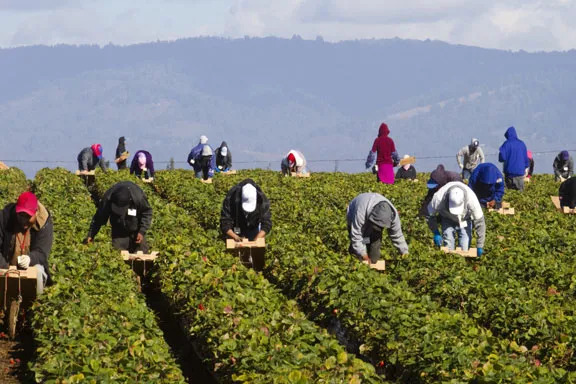
This project brings a skill set to farm workers in Watsonville in the tradition of social activist posters and WPA era graphics. It will give not only basic techniques in the screenprinting and graphic arts and social activist tradition, but also bring information and access to the resource network available to this community: health care/aid, counseling, emergency care, and access to legal assistance.
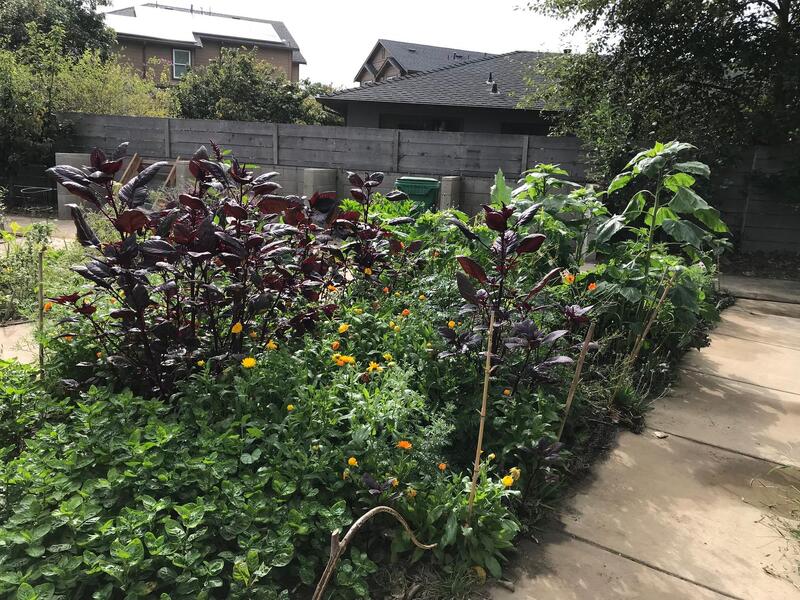
Established in 2021 at Riverside Community Garden and expanded in 2023 at the Greenhouse Project at UC Santa Cruz, the Dye Garden explores the relationships between plants, natural pigments, artistic practice, and ecological stewardship. The garden cultivates madder, weld, woad, Japanese murasaki, and other dye-producing plants, providing materials for collective harvesting, experimentation, and natural dye workshops. Located within an intergenerational community space dedicated to art, food, and climate justice, the garden supports collaborative learning among artists, students, and community members. Through workshops, teaching, and ongoing cultivation, the project connects traditional dye knowledge with contemporary environmental art and socially engaged practice.
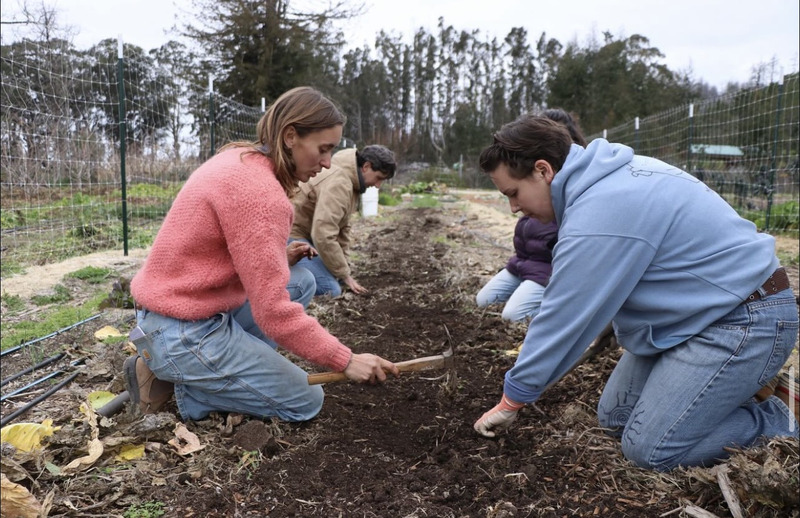
Founded in 2022 by artists L Gilbert and Dav Bell, the project is an intergenerational educational space that centers art, food, and climate justice. It is rooted in the Farm at UC Santa Cruz, where Gilbert and Bell work alongside farm staff, students, and interns to build a lasting site for programming social and agricultural experiments. The project grew out of Gilbert and Bell’s MFA thesis work in the first graduating cohort of UC Santa Cruz’s Environmental Art and Social Practice program, and was presented in the cohort’s 2023 thesis exhibition, Gently Unbind, at the Mary Porter Sesnon Art Gallery. The greenhouse also hosted the exhibition’s closing gathering, extending the show from the gallery to the farm. Through hands-on growing, shared work, and public programs, the project treats the garden as a place where people of different generations can learn together and imagine more just food systems in a changing climate.
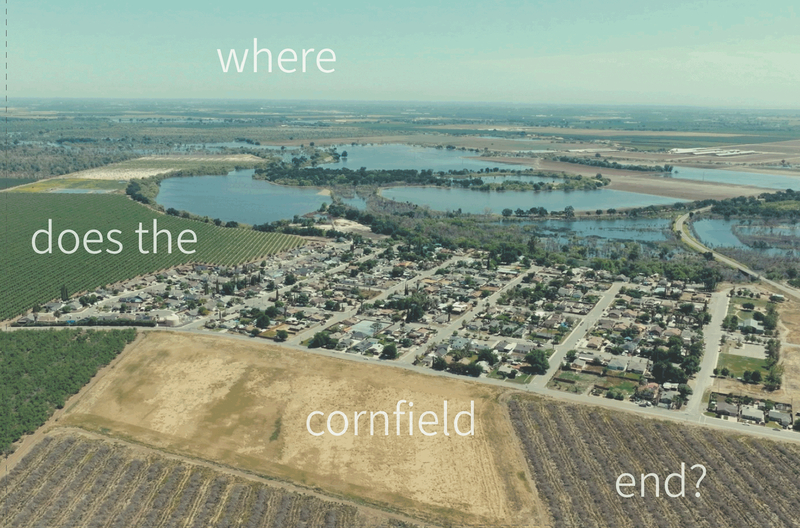
The project began at a diseased cornfield in Grayson, California, near where the San Joaquin and Tuolumne rivers meet. There, researchers were using environmental DNA (eDNA) to measure how a riparian buffer corridor, a strip of trees and shrubs planted along a waterway to filter runoff and support stream life, affects biodiversity around the industrially farmed field. In the winter of 2023, floods submerged the surrounding farmland and cut off access to the site. Residents and experts credited nearly 2,100 acres of nearby former farmland, largely restored to natural floodplain, with sparing the town from major damage. When the artists asked the river’s stewards for access to the land, they were told “There’s nothing there,” and the scientific research was put on hold.
Corcoran and Horwitz turned that pause into the project’s subject: a practice of trespassing, of looking for what is present when there is supposedly nothing to see, and of letting art and science cross-contaminate. Like eDNA sampling, which reveals traces of life not visible in a single encounter, their approach works across scales. Location sound is sampled, spliced, and sequenced into a layered portrait of place. Aerial drone footage shows the rhythms of the floodplain and the marks of human-made landscapes, while high-frame-rate, long-lens photography captures life on the ground up close. The installation pairs two films as a diptych, with original scores built from location recordings and a poetic voiceover drawn from the artists’ conversations with the site. Postcards extend the project into public participation, inviting viewers to send responses back or to pass its questions on to others.
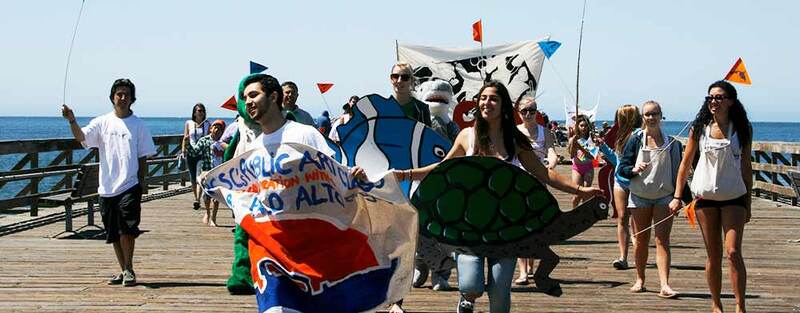
Envisioned as an outdoor gallery and living laboratory at Seacliff State Beach in California’s Monterey Bay, the S.S. Palo Alto ArtPark proposes to transform the area surrounding the historic “Cement Ship” into a space for artistic exploration and environmental education. Bringing together artists, scientists, students, and environmental organizations, the project explores connections between creative practice, marine ecology, and ocean conservation. Site-specific sculptures, interactive installations, and educational programs would engage visitors with issues including marine pollution, climate change, biodiversity, and sustainable energy. Developed through interdisciplinary collaboration with UC Santa Cruz researchers and regional marine institutions, the proposal emphasizes environmentally responsible artistic practices and public learning. ArtPark imagines how creative engagement with a changing coastal landscape can inspire environmental awareness, community participation, and collective stewardship of the ocean.
One ceremony took place privately at Earthlab in Boulder Creek and the other at Sagehen Creek Field Station in the Sierra Nevada. The wedding connects to the artists’ film Playing with Fire!, which links wildfire to climate change and to failures of government care and fossil fuel regulation. It belongs to the artists’ series of weddings to elements of the natural world, including the earth, the moon, the sun, and the fog.
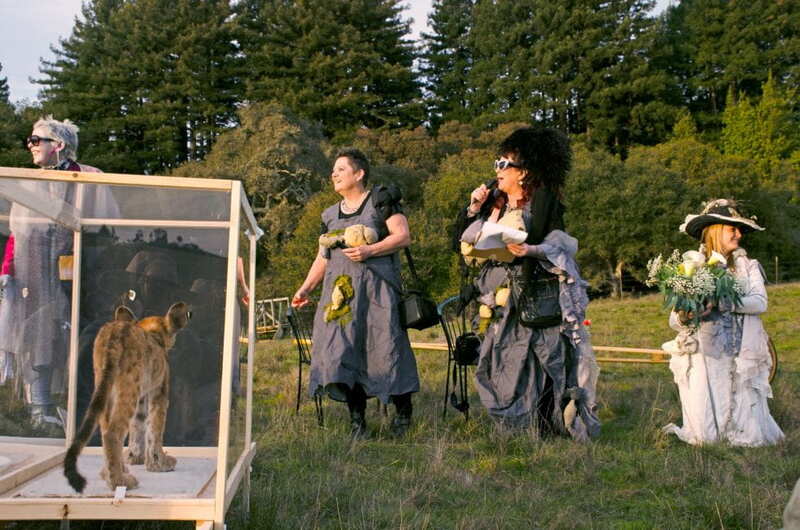
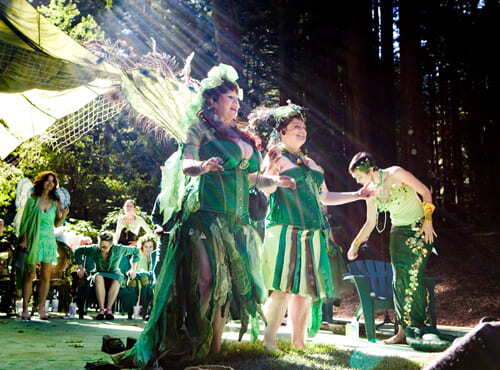
Part of the artists’ ecosex practice, the work questions hierarchies between species and conventional categories of sexuality. It belongs to the artists’ series of weddings to elements of the natural world, including the earth, the moon, the sun, and fire.
Guillermo Gómez-Peña officiated the 2008 ceremony, and twenty-six performance artists took part. Instead of gifts, the artists asked guests to help create the wedding, and 170 people volunteered. The work belongs to a series of weddings in which Sprinkle and Stephens married elements of the natural world, including the sun, the moon, and the fog.
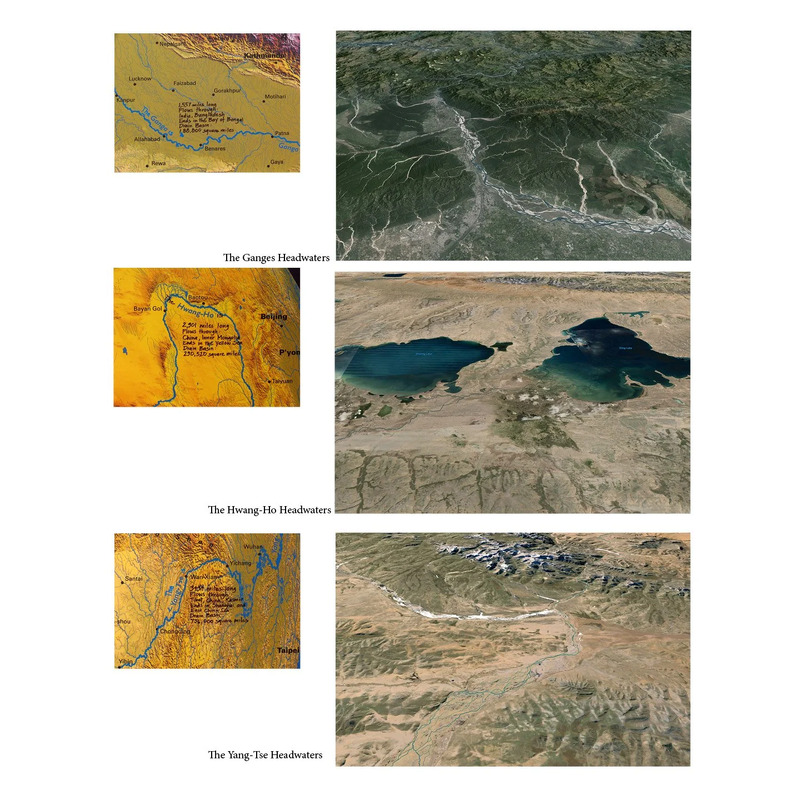
The center grew out of nearly 45 years of the Harrisons’ collaborative ecological art, which proposed ways for ecosystems and communities to adapt to environmental change. Early support included a $220,000 grant from the Metabolic Studio for research on assisted species migration at Sagehen Creek in the Sierra Nevada. Related works include Peninsula Europe, Tibet Is the High Ground, the Sierra Nevada works, and The Bays of San Francisco. Since the founders’ deaths, Joshua Harrison has continued the center’s work.
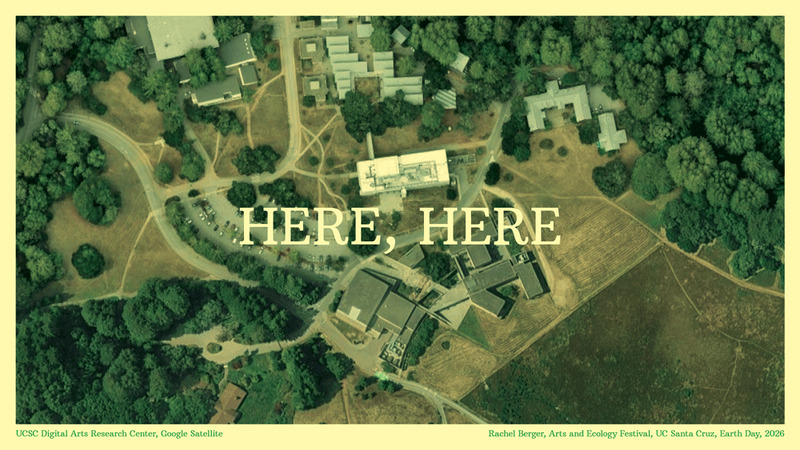
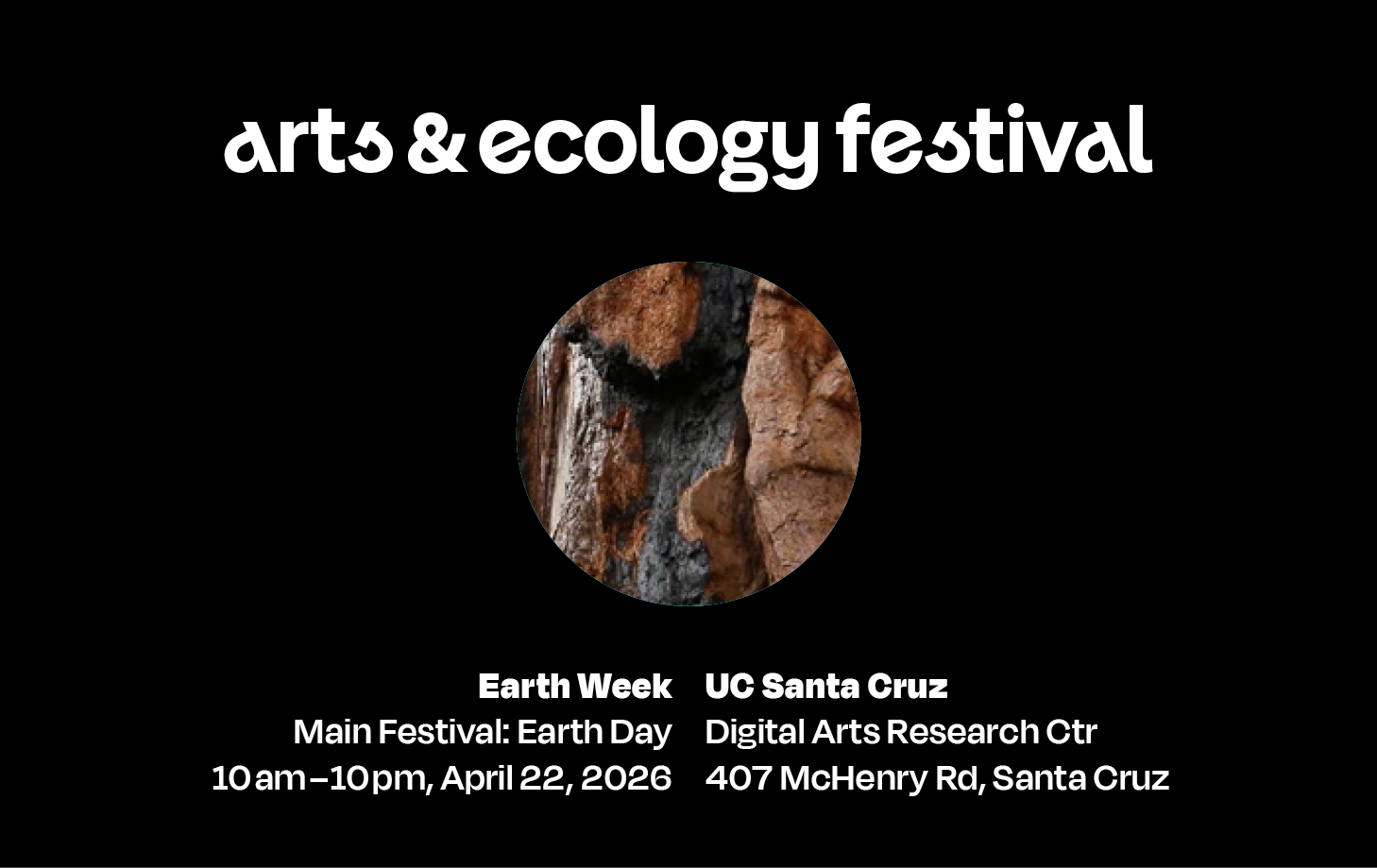
Exhibitions, talks, performances, and workshops on climate, ecology, and collective futures filled UC Santa Cruz’s Digital Arts Research Center (DARC) for a full day during Earth Week 2026. In the Black Box, artists, researchers, and community members held short panels on environmental justice and climate action. The Light Lab screened films throughout Earth Week (April 20–25). Visitors moved freely between installations, community tables in the courtyard, and hands-on workshops.