

Browse Events, Exhibitions, and Public Programs
View as:
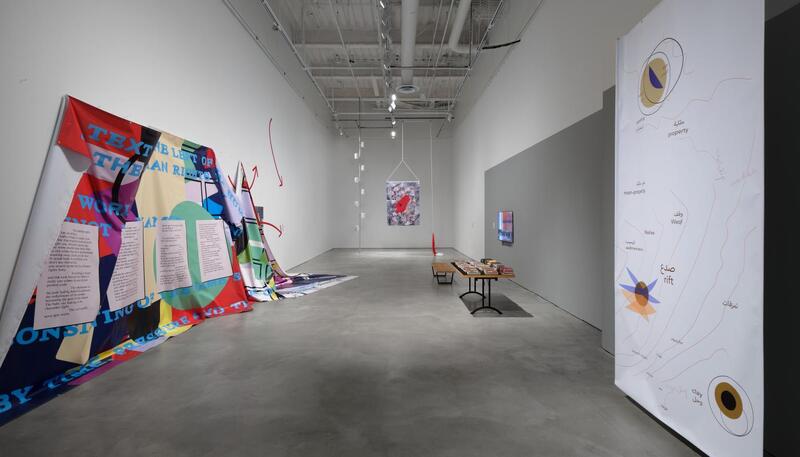
The Unworld to Come. Imagining an Otherwise…
A group exhibition at UC Irvine's University Art Galleries that treats climate change as an interlocking crisis bound up with economic and social justice, from extraction presented as green transition to the forced migration, detention and deportation of people displaced by rising seas and neo-colonial regimes. Curated by Juli Carson, Annika Haas and Sasha Ussef, it drew on Jack Halberstam's idea of 'unworlding' and Bernard Stiegler's notion of the neganthropocene to ask how a livable life might be imagined within present conditions of collapse. Works by Marwa Arsanios, Ashley Hunt, Natascha Sadr Haghighian and virgil b/g taylor were installed in the Contemporary Arts Center Gallery, accompanied by an opening reception and a day-long workshop, 'Collapse as a Condition of (Un)Knowing.' The show launched the first phase of The Neganthropocene, a three-part research project led by Carson under the UC Climate Action Arts Network.
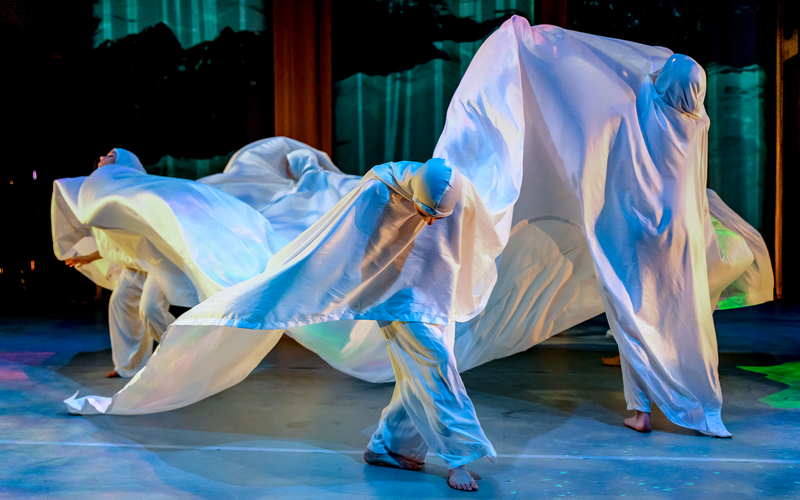
Your Ocean, My Ocean (YOMO: Intermedia)
An experimental intermedia performance combining dance, live music, projected media and visual design, created in response to the beauty of oceans and coastlines and to the damage human activity does to marine ecosystems. Directed by John Crawford with composer and violinist Mari Kimura and four choreographers, the roughly 80-minute work set live dancers and musicians against processed video shot at ocean and coastal sites, in four sections titled Emergence, Gyre, Oil Slick and Refuge. It premiered at the Experimental Media Performance Lab (xMPL) in UC Irvine's Contemporary Arts Center and was produced by the Institute for 21st Century Creativity, with scenic elements and animations developed in a UCI/RISD collaboratory course. An expanded version was presented at Brown University's Granoff Center in April 2019, and the project frames its aims around climate justice and the inclusion of diverse voices.
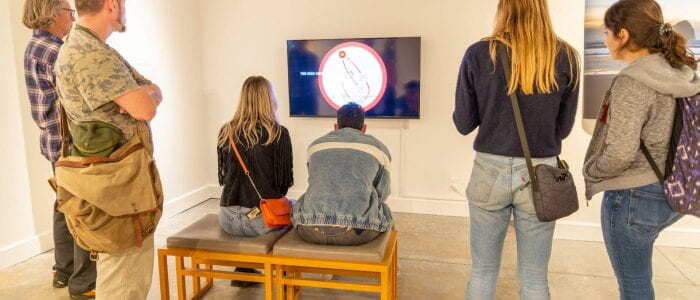
Beyond the World’s End
A group exhibition that treated apocalypse as something many communities have already lived through, by way of colonialism, displacement and genocide, rather than as a coming event. It brought together artists whose work traces the roots of present social and environmental injustice and imagines just, ecologically sustainable alternatives. Works included Amy Balkin's People's Archive of Sinking and Melting, Teddy Cruz and Fonna Forman's video proposal for a cross-border environmental commons at the Tijuana River estuary, Laurie Palmer's solar-powered discussion table Public Sun / Arendt's Table, and Newton Harrison's maps of Mediterranean pollution. The exhibition was guest curated by T. J. Demos at the Santa Cruz Museum of Art & History. It was the culminating exhibition of UC Santa Cruz's year-long, Mellon-funded Beyond the End of the World project, organized with The Humanities Institute and the Center for Creative Ecologies.
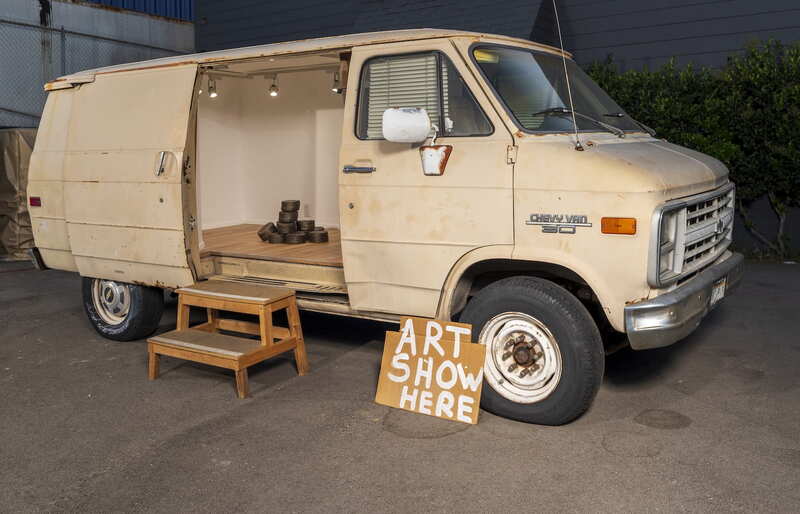
Breakdown/Breakthrough: Art and Infrastructure
A two-part group exhibition at the UC Irvine Langson Orange County Museum of Art, curated by Michaëla Mohrmann, on Southern California's built environment and the policies and power dynamics that shape how the public experiences it, from urban neglect in Los Angeles and freeways that divide neighborhoods to the environmental cost of UC Irvine's Brutalist architecture. Part one paired newly acquired photographs from Ruben Ochoa's ficus series (2007) with works by Carlos Almaraz and Pat Gomez from the museum's collection, tracing how generations of Chicano artists have shown the harm California's infrastructure and urban policies cause to communities of color. Part two, in April 2026, was a pop-up of Ochoa's Class: C (2001), a Chevy van converted into a mobile gallery, showing work by UC Irvine artists Sean Duffy, Beatrice von Rague Schleyer and André Woodward at the Irvine Barclay Theatre Plaza.
Habitat: Making the California Environment
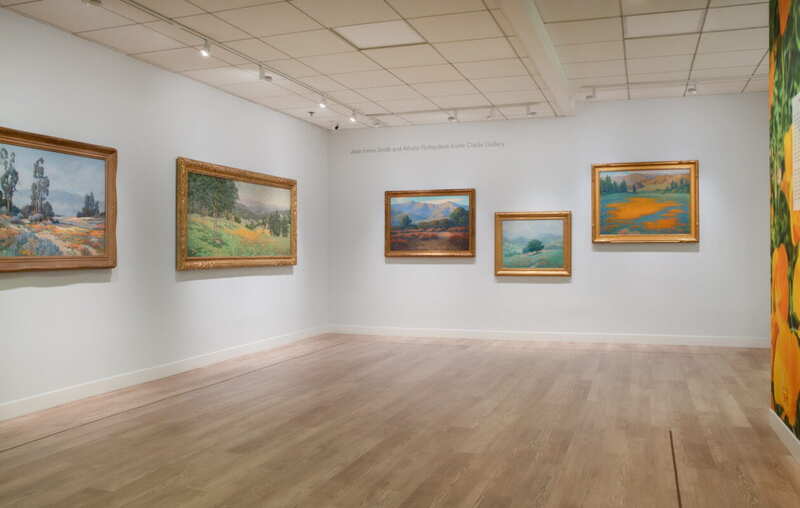
Curated by James Nisbet at UC Irvine’s Langson Orange County Museum of Art, this exhibition examines California’s changing ecosystems through plein-air landscape paintings from the late nineteenth and early twentieth centuries. Featuring more than 40 works drawn from the museum’s holdings and the James Irvine Swinden Family Collection, the exhibition considers how artists documented landscapes during a period preceding widespread urbanization and environmental transformation. Organized around native wildflowers, Orange County landscapes, California missions, mountain environments, and trees, the exhibition connects historical representations of place with contemporary concerns about invasive species, biodiversity, and habitat loss. California Certified Field Botanist Justin Felder contributed botanical identifications and ecological perspectives, while a newly commissioned sound installation, Landscape Hocket (Orange County) (2025), by Andrew Weathers extends the exhibition’s exploration of landscape through sound.
Human Impacts Bay Area: Innovations for the Climate Breakthrough
The eighth Human Impacts Salon, an evening of multimedia conversation and live art on new approaches to climate change, from decision-making apps and video games to algae fuel, organized by the Human Impacts Institute with the Transatlantic Climate Bridge of the German Embassy.
Panelists included Greg Niemeyer, Program Director of the Berkeley Center for New Media, a sponsor of the event; Georg Maue of the German Embassy; artist and educator Zakiya Harris; Joshua Sheridan Fouts of Bioneers; Jason Rissman of OpenIDEO; and Ashel Eldridge of Earth Amplified, who also performed live art with Helen Wicks.
Campus Lagoon & Exhibition Tour
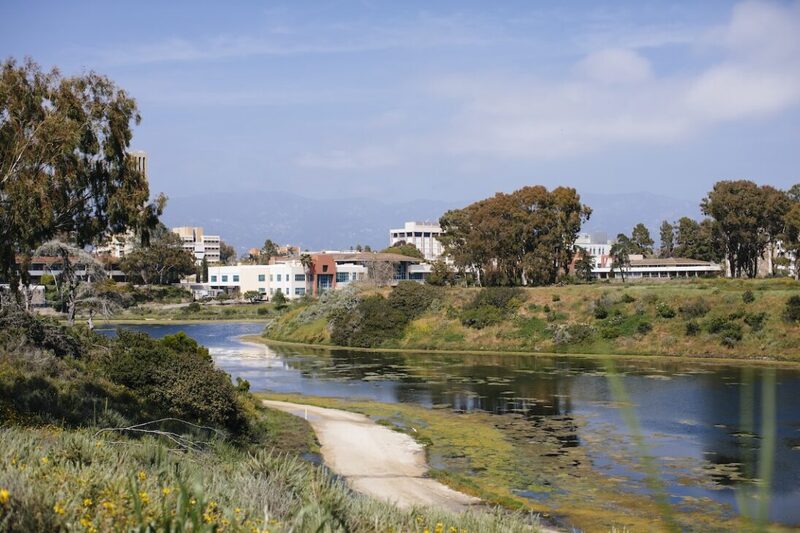
A public program pairing a walking tour of the UC Santa Barbara Campus Lagoon, led by Katja Seltmann, Katherine Esau Director of the Cheadle Center for Biodiversity and Ecological Restoration, with a walk-through of the exhibition Jackie Amézquita: Gemidos de la Tierra at the Art, Design & Architecture Museum, led by curator Ana Briz.
The museum and the Cheadle Center organized the program in conjunction with Amézquita's 2026 residency in ecological practice, which centers on native ecosystems, plant pollination and soil remediation on campus and at the Santa Cruz Island Reserve.
Big Bang Beat L.A.
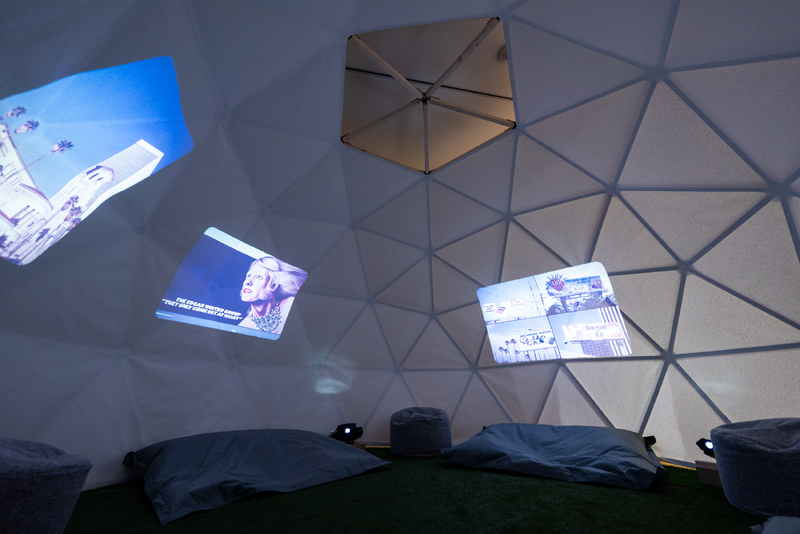
An exhibition at the Art, Design & Architecture Museum, UC Santa Barbara, drawn from the archive of Environmental Communications (EC), a 1970s Venice Beach collective of architects, artists and sociologists who argued for an architecture of whole urban environments rather than single buildings. Through photographic slides, booklets and videos distributed to architecture schools and libraries across the country, EC documented consumer society and the counterculture that resisted it, with Los Angeles, its smog, suburbs, street art and Pop architecture, as a central subject. The exhibition also reflects on the 2025 fires in the Palisades and Altadena.
Gemidos de la Tierra
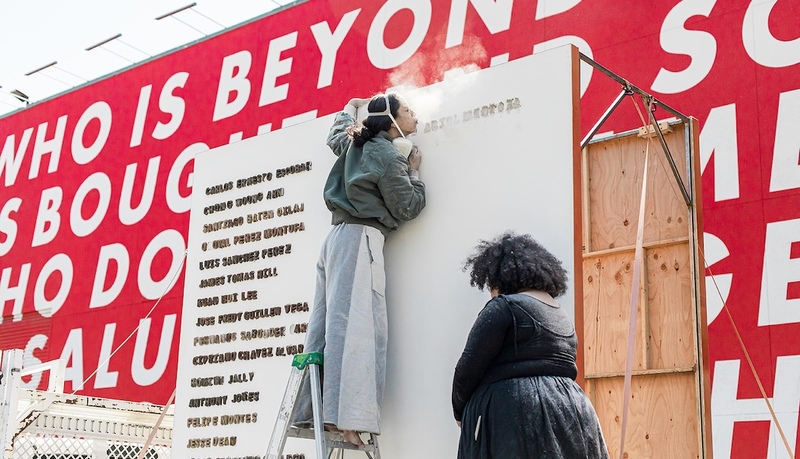
An exhibition at the Art, Design & Architecture Museum, UC Santa Barbara, of work by Los Angeles–based artist Jackie Amézquita, rooted in land-based methods and ancestral material knowledge. At its center is Gemidos de la Tierra (Wailings of the Land/Soil) (2020–ongoing), in which she hand-casts the names of people who died in U.S. Immigration and Customs Enforcement custody from 2003 to the present, each name made from soil gathered in the state where the person died, combined with masa, salt and rainwater.
Amézquita is the 2026 Artist in Residence of Ecological Practice at UCSB's Cheadle Center for Biodiversity and Ecological Restoration, and her fieldwork on campus and at the Santa Cruz Island Reserve, on native ecosystems, plant pollination and soil remediation, informs a newly commissioned work for the exhibition.
Names of people who have died in recent years are to be added during a Día de Muertos activation on November 1, 2026.
Life Frames since 1970
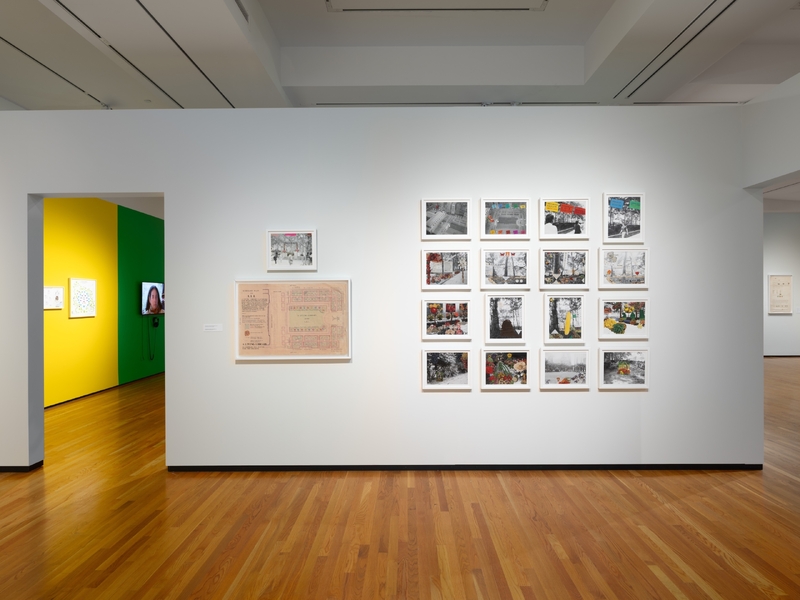
The first major survey of Bonnie Ora Sherk (1945–2021), an artist, environmental educator and landscape planner in the first generation of California conceptual and performance artists. It traces her work on art and ecology in public space, including Portable Parks I–III (1970, with Howard Levine), which turned San Francisco's urban "dead spaces" into temporary green environments, and The Farm (Crossroads Community), the experimental community art and ecology center she directed from 1974 to 1980 on land fragmented by freeway construction.
In this exhibition, newly transferred film and video were shown with photographs, collages, works on paper, artist books and ephemera from the 1970s and 1980s.
The exhibition was first organized by Fort Mason Center for Arts & Culture, San Francisco, and took place at the Art, Design & Architecture Museum, UC Santa Barbara.
WETWARE: art | agency | animation
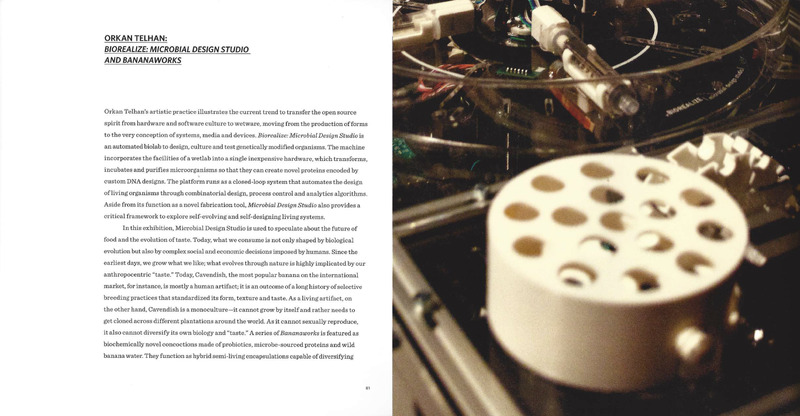
An exhibition at the Beall Center for Art + Technology, UC Irvine, curated by David Familian and Jens Hauser, on synthetic biology and wetware, in which artists use laboratory methods to come close to life. The works included synthetic amino acid necklaces, protocells that mimic the movement of phytoplankton, bacteria that generate power for a synthesizer, a desktop gene machine, and an artificially grown brain in a vat, and Evelina Domnitch and Dmitry Gelfand and Anna Dumitriu made new works in residencies developed with UC Irvine research centers. Questioning human-centered views of engineered artificial life and the responsibilities they carry, the show asked how aliveness is defined in terms of components, circuits, and systems.
Ian Ingram
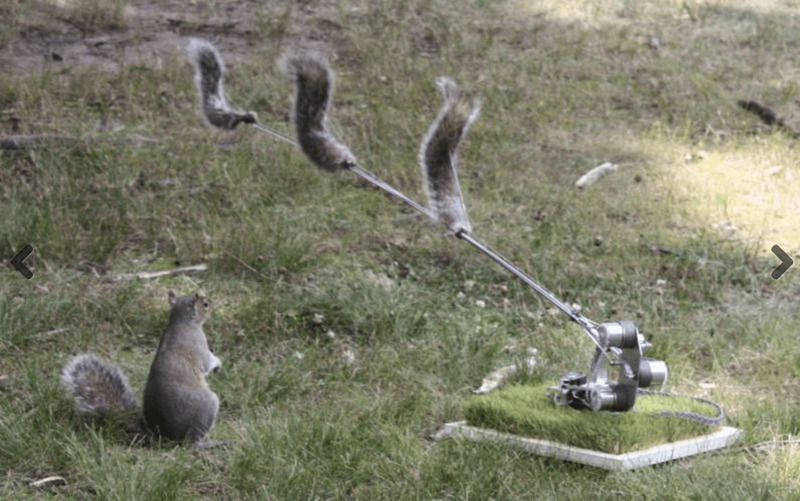
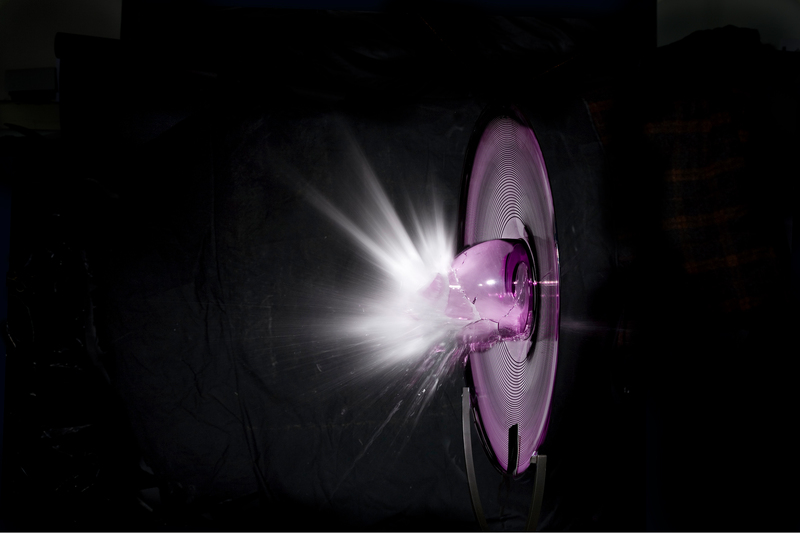
A mid-career survey at the Beall Center for Art + Technology, UC Irvine, curated by David Familian, of Ian Ingram's robotic objects from 1998 to 2021, which borrow the forms and behaviors of animals and are often made to live alongside them and speak with them in their own habitats, from earlier robots built for a raven, a lizard, or a worm to Danger, Squirrel Nutkin! (2009) and Duck, Duck, Goose (2007). New work made during his residency at the Beall's Black Box Projects turned to synanthropic animals, especially rats, that live closest to people, and to how they use built environments in search of facsimiles of ancestral landscapes, probing the boundary between constructed and grown places and the possibilities of interspecies communication and coexistence. During the run, the Beall's 2022 Art + Ecology series brought Ingram into conversation with collaborators Steve Mahler and Charissa Terranova in Just Your Garden Variety Robots, alongside talks by Carolina Caycedo and land artist Hans Baumann.
Engaging the Margins
An exhibition at the Beall Center for Art + Technology, UC Irvine, co-curated by Antoinette LaFarge and Jesse Colin Jackson, presenting artists who experiment in the marginal areas where art-making, practice-based research, and scholarship meet. Some stage their work in laboratories, some in studios, and some in wild or abandoned landscapes, and together they question how culture continues to marginalize artists who work across disciplines. Their subjects range across glacial ice, fungal life, nuclear waste, genetics, and settler colonialism. Krista-Leigh Davis's performance video No Claim to the Blue-Green Bloom (2023) follows life-size microbes through the wilderness as they adapt to a toxic environment, and Jennifer Willet's Gentleman Scientist: Microecologies (2023–25) turns to microbial ecologies. The artists were featured in LaFarge and Jackson's anthology Experimental Practices in Interdisciplinary Art: Engaging the Margins (Brill, 2024), which launched with the exhibition.
Future Tense: Art, Complexity, and Uncertainty
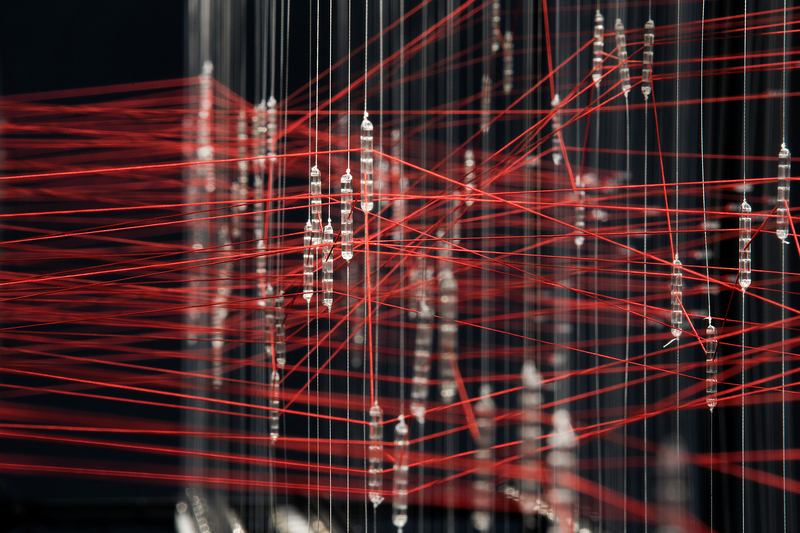
The Beall Center for Art + Technology's exhibition for Getty's PST ART: Art & Science Collide, curated by David Familian, offering artistic frameworks for understanding complex systems, which churn between order and chaos and generate feedback loops, self-organization, and uncertain behavior. From climate change and global warming to evolutionary biology, bacterial intelligence, data surveillance, financial collapse, and immigration politics, the works considered phenomena too entwined to be observed individually. Gail Wight explored how ocean acidification drives rapid evolution in aquatic microbial communities, and Theresa Schubert examined how the expansion of digital infrastructure feeds global temperature rise. Laura Splan, Chico MacMurtrie, Hege Tapio, Gail Wight, and the collective Cesar & Lois created new commissions through the Beall's Black Box Projects residency, which pairs visiting artists with UC Irvine researchers. A satellite installation, Sketches of Sensorium, drawn from Newton Harrison's Sensorium for the World Ocean, was presented at the AlloSphere at UC Santa Barbara.
Ecotechnics
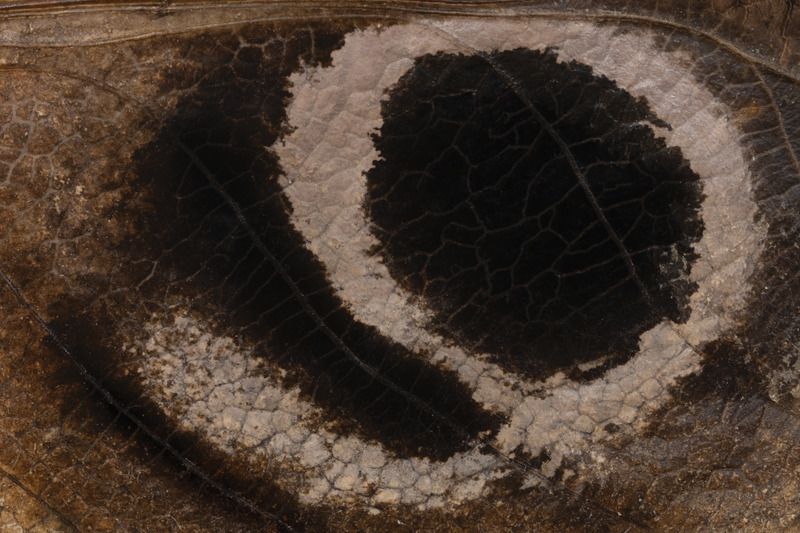
An exhibition at the Beall Center for Art + Technology, UC Irvine, curated by Zachary Korol Gold, that traces a sensibility among contemporary artists who treat ecology not as a settled set of facts but as a system of images. Eleven artists, among them Lauren Bon, Maru García, Sean Raspet, Jeffrey Stuker, and Diana Thater, take divergent paths through the technologies, histories, and fictions by which environments and organisms are known. By turning the technical images and devices used to measure environments back on themselves, their works picture how contemporary society produces its ecological view, and the exhibition asks how people, through technology and as technical beings, sense and represent the living world.
Breath, Soil, Water, Life
A live performance at the Manetti Shrem Museum of Art, UC Davis, created by students in African American Studies 152: Major Voices in Black World Literature, taught in the museum's galleries by Professor Margaret Laurena Kemp, chair of the Department of Theatre and Dance, during the 2025 run of Breath(e): Toward Climate and Social Justice. Through a multimodal curriculum, students read Tina Campt's Listening to Images, Claudia Rankine's Don't Let Me Be Lonely, and LaToya Ruby Frazier's Flint Is Family in Three Acts, which documents the Flint water crisis, and explored writing, singing, and dance with Professor Bhumi Patel, using breathwork as a way of staying grounded while engaging climate and social justice. The course culminated in a public performance in the galleries alongside Frazier's photographs, a meditation on breath, identity, resistance, and the power of listening that wove poetry, movement, and voice to confront injustice and affirm resilience, agency, and spirit. Students' responses were also added to the exhibition as a soundscape visitors could reach by QR code, and the museum documented the project in a short video.
Pyro Futures
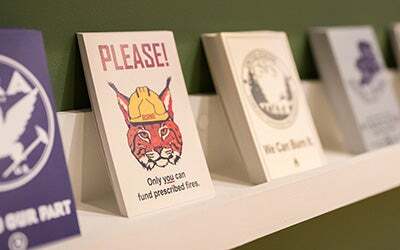
An exhibition at the Manetti Shrem Museum of Art, UC Davis, on how fire and fire stewardship could reshape California's landscapes. It was created by UC Davis landscape architecture and environmental design professors Brett Milligan and Emily Schlickman and grew from their book Design by Fire: Resistance, Co-Creation, and Retreat in the Pyrocene (2023). Built in collaboration with artists and ecologists, it gathered images and objects on the history of wildfire in the western United States, including firefighting helmets and burnt objects, a projected video of prescribed burns, and a large glass case staging three possible fire futures, ranging from Indigenous land stewardship and cultural burning reshaping the U.S. Forest Service to worsening megafires if emissions go unchecked. Visitors pinned their homes on a large map of high fire-risk zones, shared their own experiences of wildfire in journals, and took home fire-themed postcards proposing alternatives to Smokey Bear, among them Burnie the Bobcat, a mascot who would light good fires rather than fight them. A billboard on Interstate 80 between Sacramento and Davis carried the message “Only you can decide our fiery future,” and an online journal at pyrofutures.com extended the conversation beyond the museum.
Five Tables of Art & Climate Change
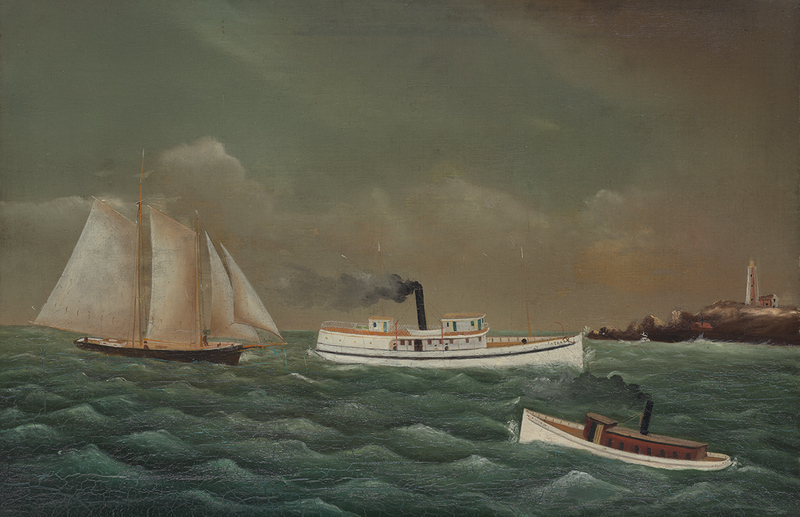
A one-afternoon presentation at BAMPFA curated by first-year students in UC Berkeley Professor Sugata Ray's Fall 2023 College of Letters & Science First-Year Pathways course, Art and Climate Change. Using the museum's Five Tables format, the students set out works from the BAMPFA collection that reflect, mediate, and delve into the interconnected ecologies of life, asking what art, architecture, design, and performance can offer to debates on climate change and environmental justice in a time of nuclear disasters, acid rain, and mass extinction. Moving from early modern landscapes and colonial photography to contemporary art and eco-activism, the selection explored decolonial histories and radical futures attentive to Indigenous epistemologies, interspecies friendships, the desires of nonhuman life forms, and other ways of being marginalized by colonialism, capitalism, and the economies of natural resource extraction. Among the works was Marine Scene (1840), an oil painting by an unknown artist of sailing ships and steamships together on a rough sea.
Waste to Art
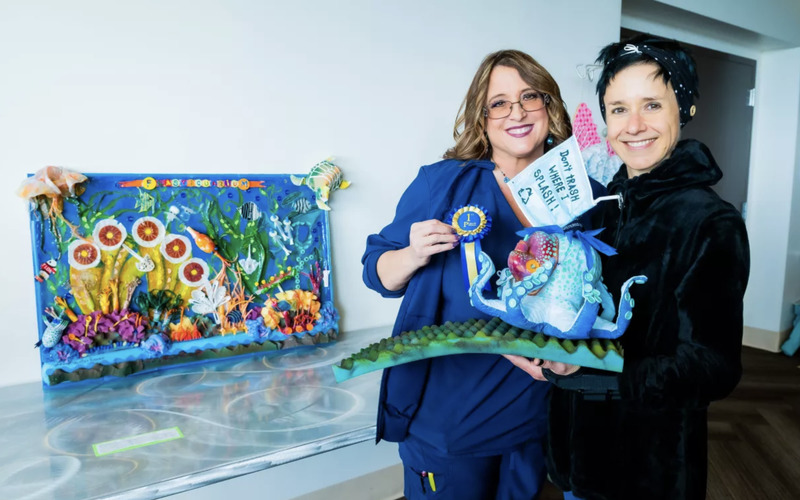
The healthcare sector is one of the largest contributors to waste in the United States, generating more than five million tons annually. Approximately 85% of this material is classified as noninfectious, yet much of it is sent to landfills rather than recovered, recycled, or reused. In response to this environmental challenge, UCSF and UCSF Health launched a creative initiative inviting participants to transform discarded medical and everyday materials into works of art. Selected artworks have been exhibited across campus and medical center locations, bringing greater visibility to the possibilities of creative reuse.
The initiative seeks to engage the diverse UCSF community in conversations about environmental responsibility while encouraging participants to reconsider patterns of consumption and disposal in healthcare settings. By connecting artistic experimentation with sustainable practices, the project invites new perspectives on waste reduction, resource recovery, and the transition toward a more environmentally responsible future.
1991: The Oakland-Berkeley Fire Aftermath, Photographs by Richard Misrach
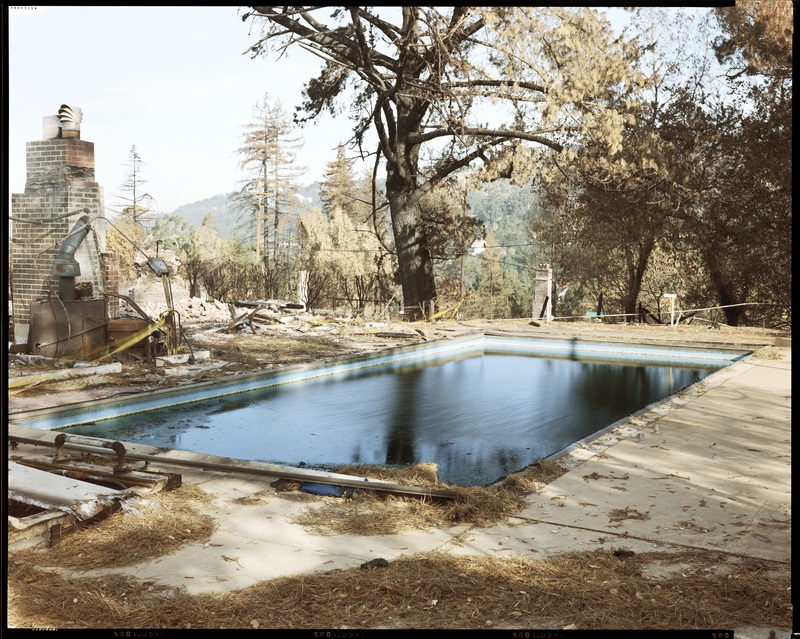
Photographs Richard Misrach made in the days after the October 1991 firestorm that swept through the Oakland and Berkeley hills, shown at BAM/PFA to mark the fire's twentieth anniversary. The Bay Area photographer entered the fire zone with an eight-by-ten-inch view camera, recording both stark vistas and intimate details of destroyed homes: a melted refrigerator, a mailbox, a stairway, a swimming pool among scorched trees. The forty photographs, unseen in the twenty years since the fire, included fourteen large-scale prints whose immense scale invites viewers into Misrach's quiet elegies, and a grid of twenty-six smaller prints forming an elegy wall. The Oakland Museum of California presented its own forty-photograph selection at the same time, and many of the prints entered BAM/PFA's collection as gifts of the artist. A companion exhibition, Richard Misrach: Photographs from the Collection, drew on series such as Desert Cantos and Bravo 20 Bombing Range that explore the complex relationship between humans and nature.
Human/Nature: Artists Respond to a Changing Planet
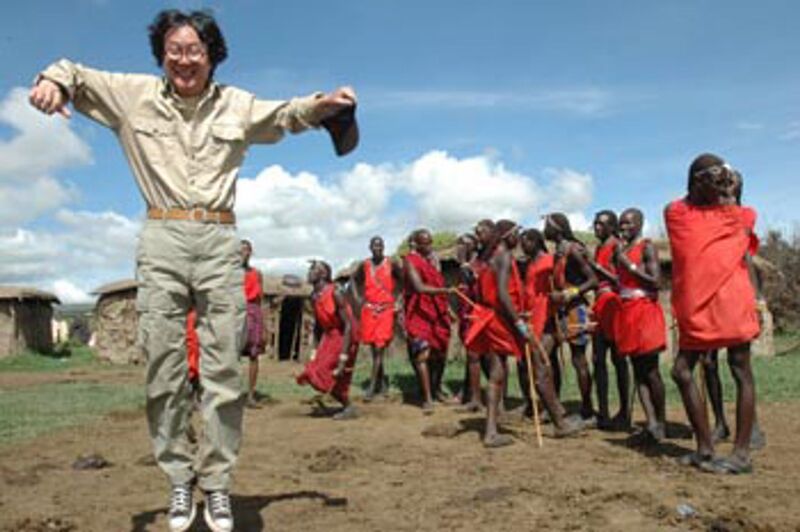
A collaborative artist residency and exhibition project that sent eight leading artists to eight threatened UNESCO World Heritage sites to make new work about the relationships between fragile natural environments and the human communities that depend on them. Co-organized by the Berkeley Art Museum and Pacific Film Archive and the Museum of Contemporary Art San Diego with the international conservation organization Rare, it opened in San Diego in 2008 before coming to Berkeley, and each artist completed two or more residencies between 2005 and 2008. Mark Dion built a supply cart for the under-resourced rangers of Komodo National Park in Indonesia. Ann Hamilton created a poetic text performed by Galápagos schoolchildren, heard against footage of a wavering ocean horizon. Iñigo Manglano-Ovalle filmed in Baja California's El Vizcaíno Biosphere Reserve, a gray whale breeding ground threatened by industrial development. Marcos Ramírez ERRE built a wall with residents of Yunnan's Three Parallel Rivers using regional methods, set with video windows onto their lives. Rigo 23 worked with artisans in Brazil's Atlantic Forest to remake a cluster bomb and a nuclear submarine in traditional materials as celebrations of life. Dario Robleto joined a glacier measuring expedition in Waterton Glacier International Peace Park and made sculptures about the disappearance of species and collective mourning. Diana Thater filmed wildlife in South Africa's iSimangaliso Wetland Park, and Xu Bing worked with schoolchildren near Mount Kenya's receding glaciers on artworks built from the Chinese characters for trees, with proceeds supporting reforestation.
Breath(e): Toward Climate and Social Justice
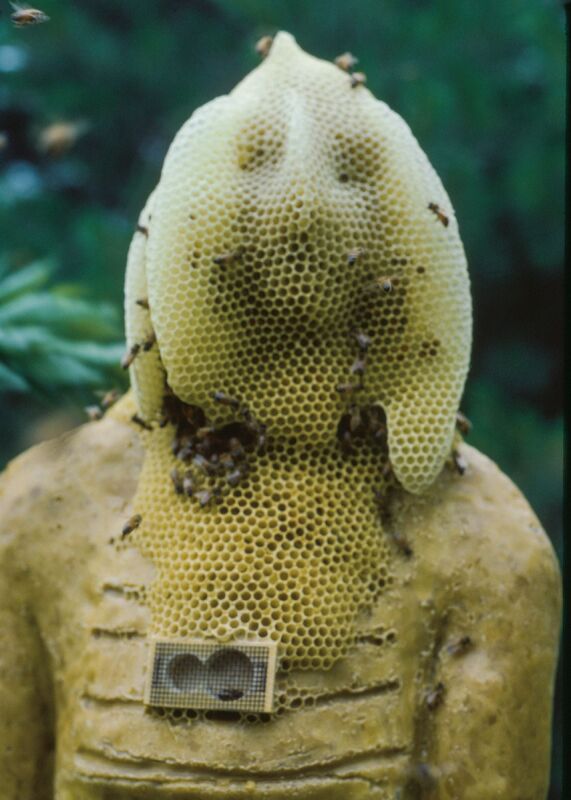
A major exhibition at the Hammer Museum, UCLA, that centered environmental art addressing the climate crisis and human-caused disasters, and their inescapable intersection with equity and social justice. Curated by artist Glenn Kaino and guest curator Mika Yoshitake, with PST fellow Jennifer Buonocore-Nedrelow, it brought together more than 100 works by 25 intergenerational artists working in photography, multimedia, augmented reality, painting, living organisms, and more, and filled most of the Hammer's galleries and outdoor spaces. Conceived during the COVID-19 pandemic and the racial reckoning of 2020, the exhibition drew on ancestral Indigenous knowledge that treats all elements of nature as one family rather than as resources for human use.
New commissions included Cannupa Hanska Luger's multi-part installation Sovereign, a Garnett Puett Apisculpture made in collaboration with a living bee colony, Lan Tuazon's outdoor installation built from plastic waste donated by visitors, Ron Finley's garden installation Grounded, and Mel Chin's IOV (Interpretation of Vision), developed from stories gathered through an open call. Other works traced the slow violence of environmental harm, from LaToya Ruby Frazier's photographs of the Flint water crisis to Tiffany Chung's architectural models of climate displacement in Vietnam. Part of Getty's PST ART: Art & Science Collide and presented in partnership with Conservation International, the exhibition was also documented as a Getty case study in measuring and reducing an exhibition's carbon footprint. After its Los Angeles presentation, the exhibition traveled to the Moody Center for the Arts at Rice University in Houston and to the Jan Shrem and Maria Manetti Shrem Museum of Art at UC Davis (August 7 – November 29, 2025), where a version with fourteen of the artists hosted UC Davis classes in the galleries, including a course whose students created the performance Breath, Soil, Water, Life in response to LaToya Ruby Frazier's Flint is Family in Three Acts.
Weather and the Whale
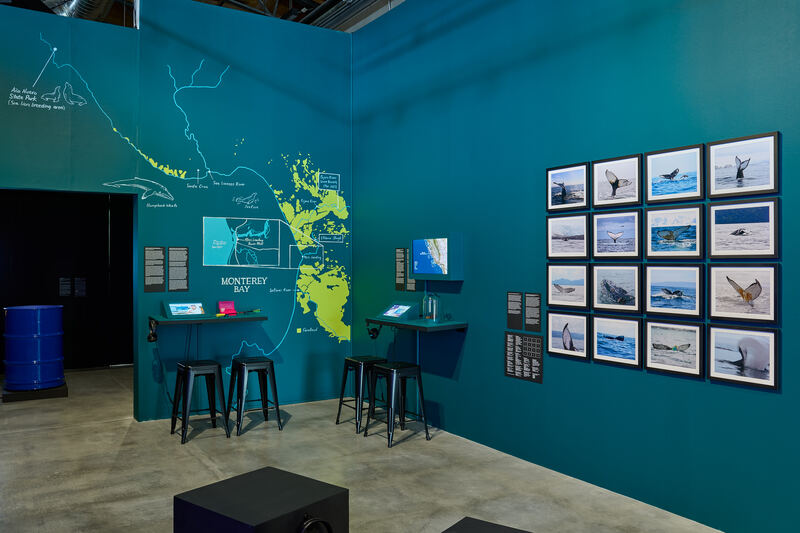
A major exhibition at the Institute of the Arts and Sciences, UC Santa Cruz, that brought internationally acclaimed artists into collaboration with marine ecologists at the Friedlaender Lab. Its title reflects how both weather and whales act as indicators of climate change. Presented across the institute's three galleries and screening room, the exhibition paired new research and data from two years of Friedlaender Lab fieldwork, much of it made public for the first time, with video installations, sculpture, photography, and other works, most of them newly commissioned. The research traces how environmental toxins, sea ice retreat, and other threats affect whales and other large marine mammals, including in Monterey Bay and along California's coast. Together, the science and the artworks explore human and nonhuman experiences of the climate crisis and imagine climate justice across land and ocean. The participating scientists were Natalia Botero Acosta, Ari Friedlaender, Chloe Lew, and Logan Pallin. Organized as part of An Aesthetics of Resilience and funded by a University of California Office of the President California Climate Action Seed Grant, with additional support from the Coha Nowark Art + Science Fund, the exhibition was accompanied by the public program series Intersections of Climate Change, study guides, and a catalog.
indelible traces
Human history is brief when measured against the age of the Earth.
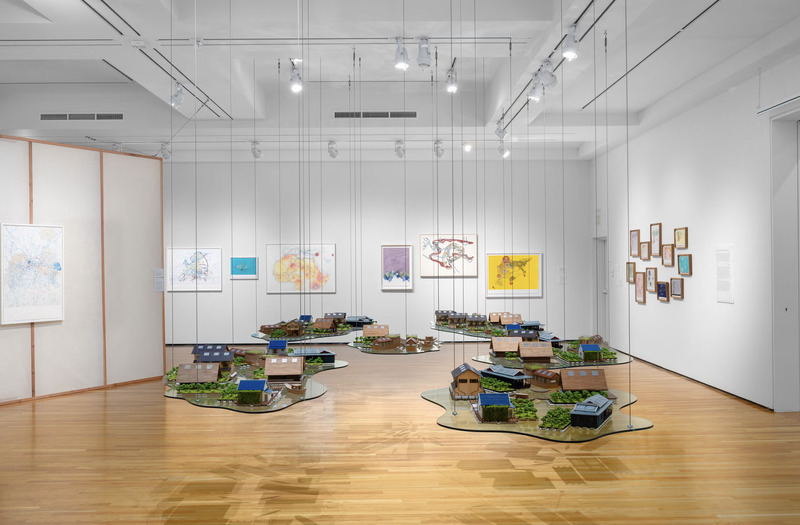
At UC Santa Barbara’s Art, Design & Architecture Museum, Tiffany Chung’s mid-career survey exhibition considers human history alongside the planet’s much longer timeline. “Tiffany Chung: indelible traces” brings together more than 70 artworks spanning 25 years by the Vietnamese American artist and UCSB alumna.
Known for her detailed hand-drawn and embroidered maps, Chung depicts history as layered and interconnected. She combines statistical data, archival research and lived experience to build fuller accounts of historical events — and to represent what has been left out or remains unclear.
Organized by the AD&A Museum and guest curated by Orianna Cacchione, deputy director at the University of Richmond Museums, the exhibition reflects a practice grounded in research.
That research takes visual form through various mediums, in which mapping plays a key role.
PINKBOX
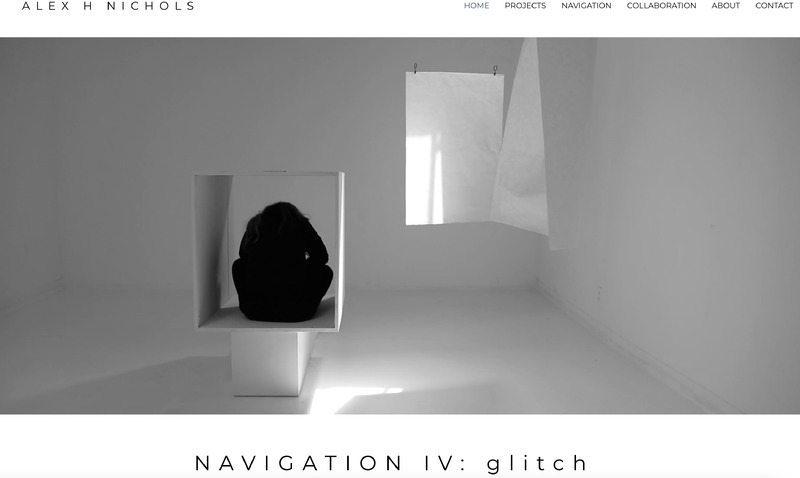
Inside a pink aluminum box (36 × 32 × 34 in.), roughly the size of a curled-up body, a woman moves. Born out of grief and loss, this sculpture, installation, and performance by San Francisco multimedia artist Alex Nichols, made with sound artists Kevin Corcoran and Jorge Bachmann, addresses the constraints that society, culture, race, and gender place on individuals.
Before the Look of Law
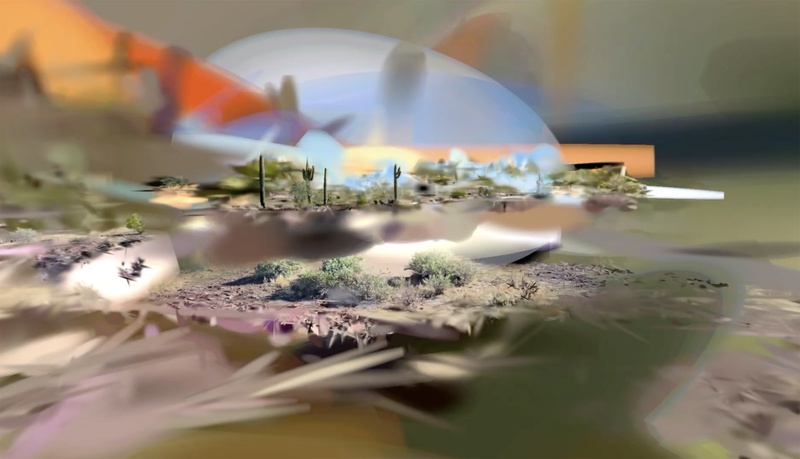
Inspired by Franz Kafka’s Before the Law, this exhibition examines how contemporary artists challenge systems of power and imagine justice through collective action and aesthetic disobedience. Addressing war, policing, imprisonment, displacement, and the repression of marginalized communities, the exhibition brings together artistic practices that create spaces for recognition, solidarity, and political resistance. Revisiting Simon Leung’s 2006 exhibition The Look of Law, which explored the relationship between state power and the psyche during the United States’ War on Terror, the project extends these questions into contemporary struggles for justice. Through artworks and accompanying public programs, Before the Look of Law considers how artistic expression can challenge dominant narratives and cultivate new forms of collective political imagination.
Wedding to Fire
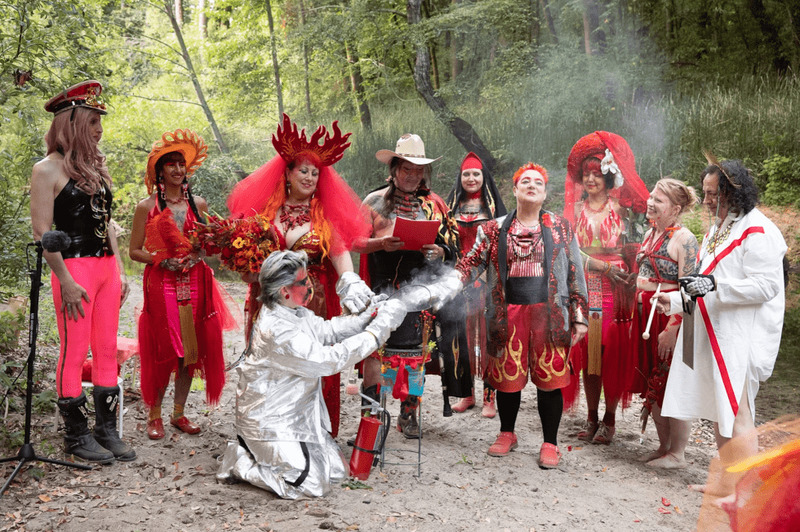
One ceremony took place privately at Earthlab in Boulder Creek and the other at Sagehen Creek Field Station in the Sierra Nevada. The wedding connects to the artists’ film Playing with Fire!, which links wildfire to climate change and to failures of government care and fossil fuel regulation. It belongs to the artists’ series of weddings to elements of the natural world, including the earth, the moon, the sun, and the fog.
Fog Wedding
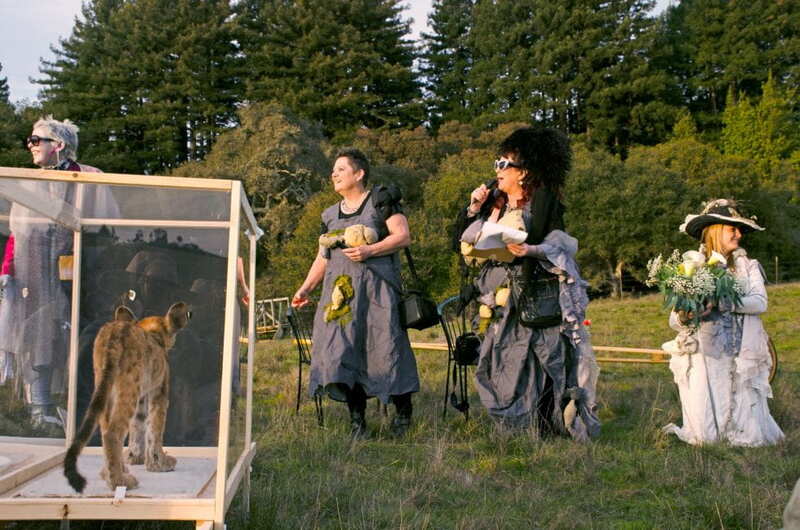
Part of the artists’ ecosex practice, the work questions hierarchies between species and conventional categories of sexuality. It belongs to the artists’ series of weddings to elements of the natural world, including the earth, the moon, the sun, and fire.
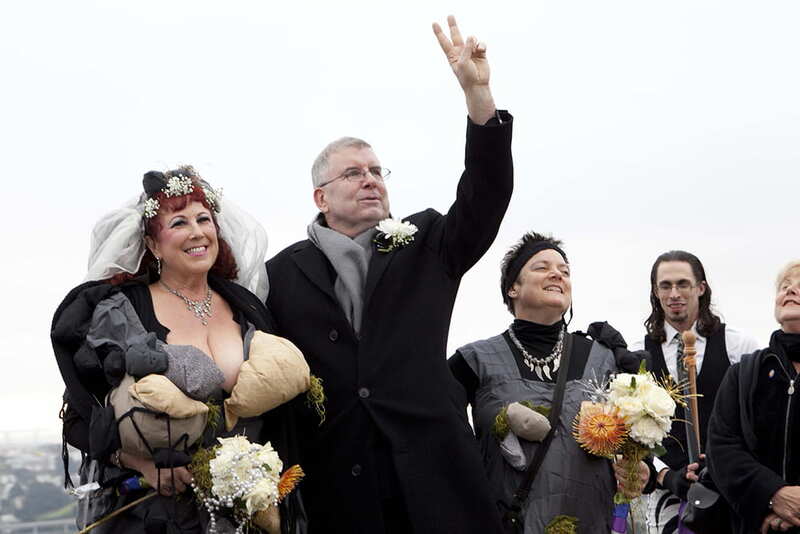
Wedding to the Sun
Guests carried a long silk ribbon in a procession around the hill, and the ceremony included live music, performances, and a homily by theater director Rudy Ramirez, with Katy Bell as production manager. The work belongs to the artists’ series of weddings to elements of the natural world, including the earth, the moon, and the fog.
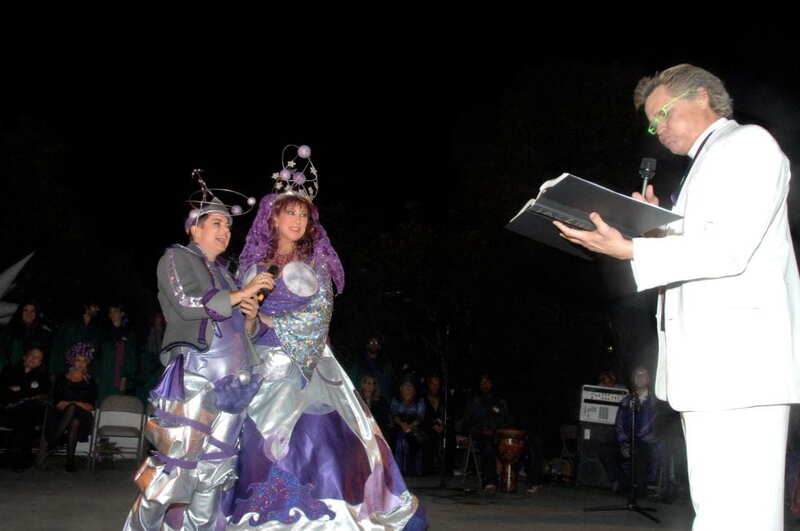
Wedding to the Moon
Reverend Billy (Billy Talen) officiated with the Church of Life After Shopping Choir, and the program included performances by Larry Bogad, Mariko Passion, Lian Amaris, Candye Kane, and others. The ceremony took place in Farnsworth Park and belongs to the artists’ series of weddings to elements of the natural world, including the earth, the sun, and the fog.
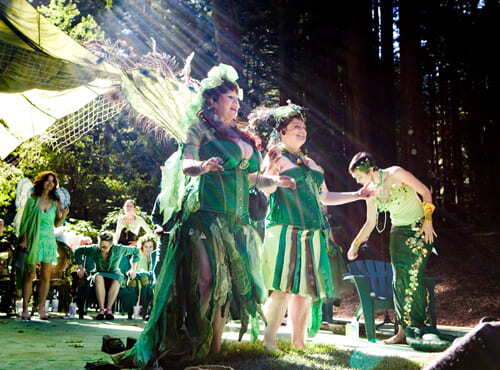
Wedding to the Earth
Guillermo Gómez-Peña officiated the 2008 ceremony, and twenty-six performance artists took part. Instead of gifts, the artists asked guests to help create the wedding, and 170 people volunteered. The work belongs to a series of weddings in which Sprinkle and Stephens married elements of the natural world, including the sun, the moon, and the fog.
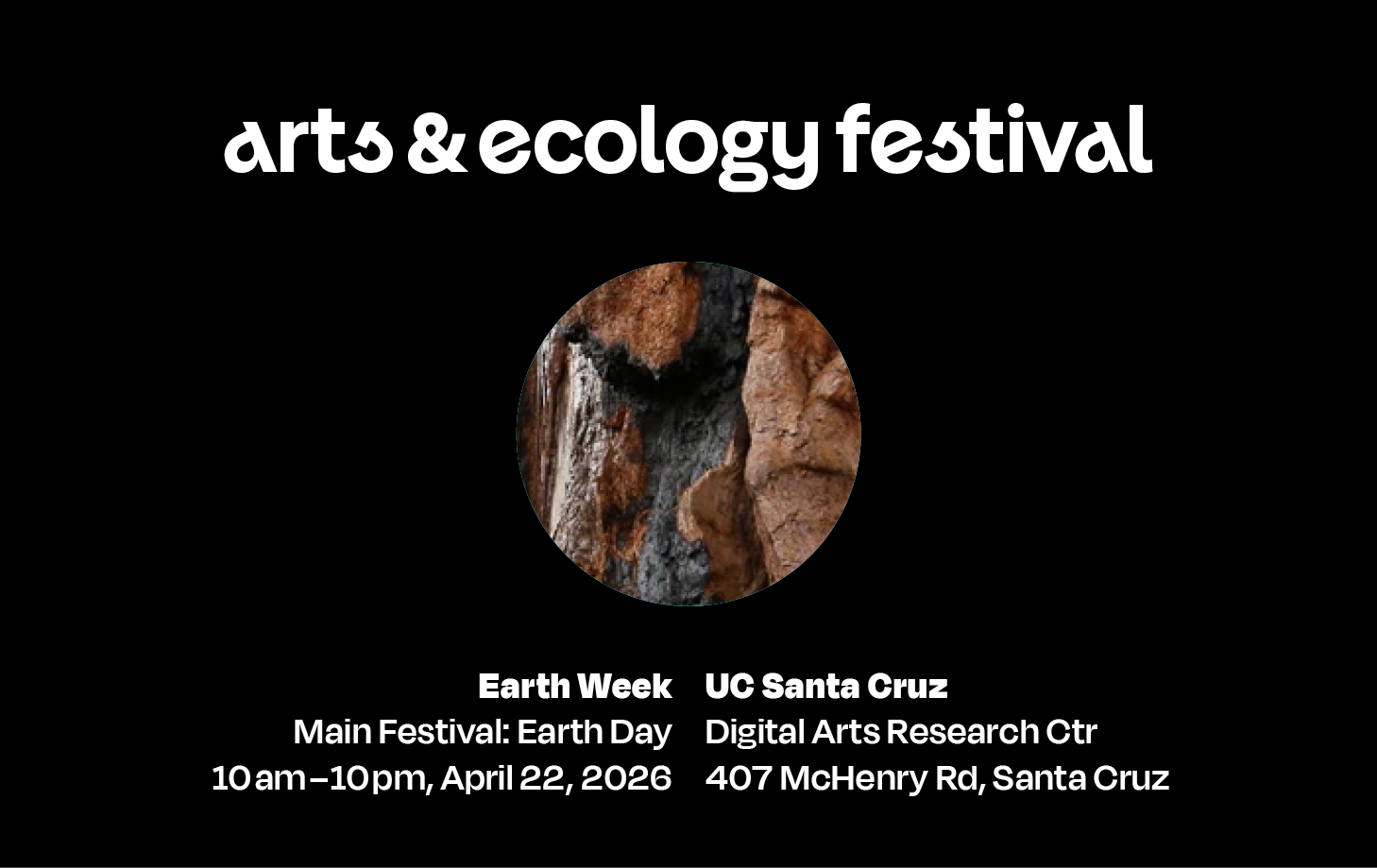
UCSC Arts & Ecology Festival
Exhibitions, talks, performances, and workshops on climate, ecology, and collective futures filled UC Santa Cruz’s Digital Arts Research Center (DARC) for a full day during Earth Week 2026. In the Black Box, artists, researchers, and community members held short panels on environmental justice and climate action. The Light Lab screened films throughout Earth Week (April 20–25). Visitors moved freely between installations, community tables in the courtyard, and hands-on workshops.