
Item set
UC Santa Barbara
- Title
- UC Santa Barbara
Items
View as:
Item
Project
Interlopings: Invasive Species / Endemic Breeds
Artist Statement:
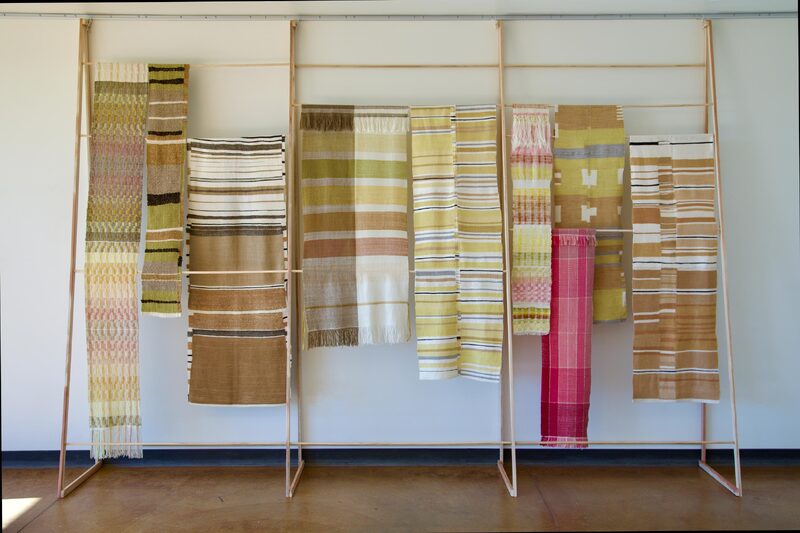
We are dyeing wool with dyestuff from invasive and non-native plants growing on Santa Cruz Island in the Channel Islands archipelago in California, investigating the complex and intertwined influence humans have on our ecosystems, and the aesthetic, emotional, magical, and medicinal interrelationships between humans, plants and color. The wool is spun into yarn, the yarn woven into shawls. In addition, we are constructing a database of natural dye colors and various methods for visualizing and organizing that data, using a wide range of systematics, from scientific to alchemical.
The organisms (many plants and one insect, cochineal) we are working with, were brought to the island over an extended period of time, starting when it was first colonized by Europeans. New organisms were still consciously introduced in the late 20th century. For example, cochineal (coincidentally a very important source of red dye) was brought to the island in the late sixties to help kill off the cactuses which were considered a hazard to the cows grazing on the island.
The human immigrants had a relationship to these organisms in their home lands for millennia, many of these plants have been used for food, medicine, magic and dyes. Just as with humans, some behave better than others when arriving in a new land. Robin Wall Kimmerer, botanist and member of the Citizen Potawatomi Nation, writes about Broadleaf plantain with affection in “Braiding Sweetgrass: Indigenous Wisdom, Scientific Knowledge and the Teachings of Plants.” To her, plantain is a model citizen, a foreign-born who is not colonizing. It’s a generous and healing newcomer, who is truly listening to the new environment. Other plants are infamous for wreaking havoc in the eco-systems they “invade”. On Santa Cruz Island, fennel, a sweet smelling, delicious plant, which is highly medicinal, traditionally used for protection magic and yields a magical yellow color, has taken over large swaths of land to the detriment of the native flora. It is now one of the many plants targeted for eradication from the island in a major conservation effort aiming to restore it to a more (real or perceived) natural state.
The sheep breeds producing the wool and yarns we are working with have an historical connection to Santa Cruz Island. It’s believed that the Santa Cruz Island sheep breed stems from sheep of several breeds, potentially including Merino, Rambouillet (a French version of Merino), and English Leicester, brought to Santa Cruz Island in the mid 19th century for wool and meat production. Over the years, the sheep increased in numbers and became feral, causing massive erosion to the landscape. In the nineties, consistent with restoration efforts on the island, the sheep, then in the tens of thousands, were eradicated. Due to the methods used (very few sheep were brought to the mainland, most were shot on the island) the endemic Santa Cruz Island breed has ironically become one of the five most critically endangered breeds on the Livestock Conservancy's conservation priority list.
The wool from these sheep speaks about the landscape where the individual sheep lead their lives and the breed emerged. Its staple length and crimp, the soil and vegetable matter trapped in it, reveals something about the sheep, the breed and their environment (craftspeople now speak of the 'terroir' of wool.)
Interlopings: Invasive Species / Endemic Breeds is a process-based collaborative art project combining traditional techniques such as dyeing, spinning and weaving, with data visualization and ‘performative science’ and ‘relational aesthetics’ strategies. The public is invited to participate in the process through workshops and exhibitions and to have a direct visual, olfactory and tactile experience with animals and plants that have been introduced to the island. By smelling and touching the wool, inspecting the insects and vegetable matter stuck to it, getting dazzled by rich and subtle colors given to us by the plants and sensing the warmth from the finished shawls, the audience-participants inadvertently explore a wide array of topics. They might gain insights into issues ranging from aspects of the natural and cultural history of the Channel Islands and conservation, to topics related to the Anthropocene and chemistry. Some of the questions this project evoke are: How do we define what a “native” species is? When was 'wild'? How do we decide where species belong? What animals 'deserve' our protection? What is the goal with conservation? What ends justifies what means? (Growing up in Sweden in the seventies, we marched to the catchy chant “sluta spruta” - stop spraying, while the children today learn that one of the most significant dangers to our natural environment are alien species.)
While these issues will be discussed in the workshops and exhibitions, this is an art project relying on visual, tactile, and olfactory modalities of generating meaning. As such the most important questions will be asked, and maybe answered, in the direct experiences of hands, noses, and eyes and in the relationships created between people and between people, processes and materials.
Item
Event
Campus Lagoon & Exhibition Tour
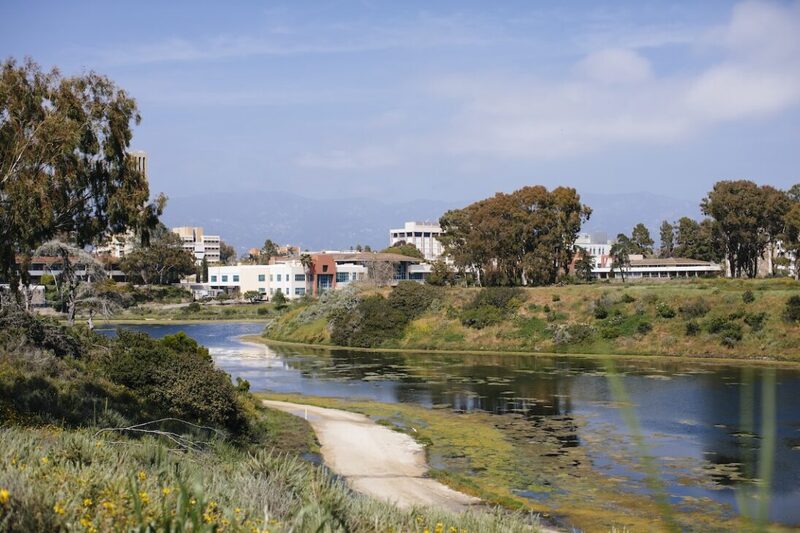
A public program pairing a walking tour of the UC Santa Barbara Campus Lagoon, led by Katja Seltmann, Katherine Esau Director of the Cheadle Center for Biodiversity and Ecological Restoration, with a walk-through of the exhibition Jackie Amézquita: Gemidos de la Tierra at the Art, Design & Architecture Museum, led by curator Ana Briz.
The museum and the Cheadle Center organized the program in conjunction with Amézquita's 2026 residency in ecological practice, which centers on native ecosystems, plant pollination and soil remediation on campus and at the Santa Cruz Island Reserve.
Item
Event
Big Bang Beat L.A.
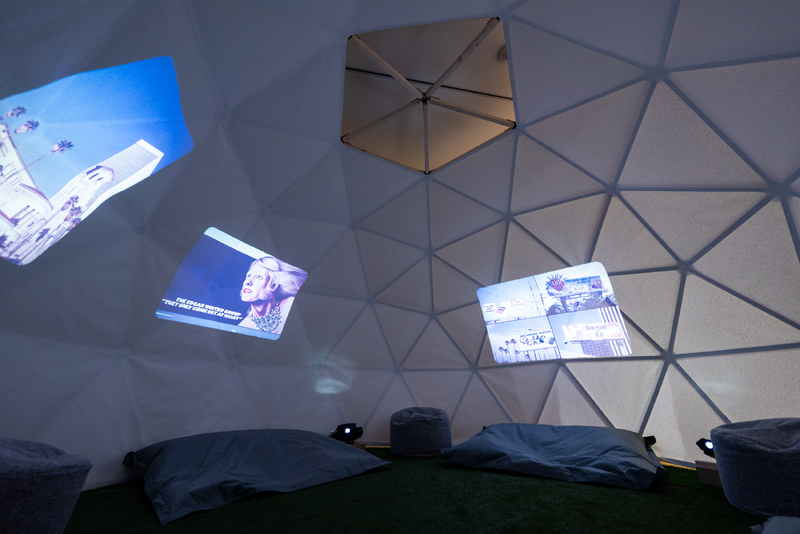
An exhibition at the Art, Design & Architecture Museum, UC Santa Barbara, drawn from the archive of Environmental Communications (EC), a 1970s Venice Beach collective of architects, artists and sociologists who argued for an architecture of whole urban environments rather than single buildings. Through photographic slides, booklets and videos distributed to architecture schools and libraries across the country, EC documented consumer society and the counterculture that resisted it, with Los Angeles, its smog, suburbs, street art and Pop architecture, as a central subject. The exhibition also reflects on the 2025 fires in the Palisades and Altadena.
Item
Event
Gemidos de la Tierra
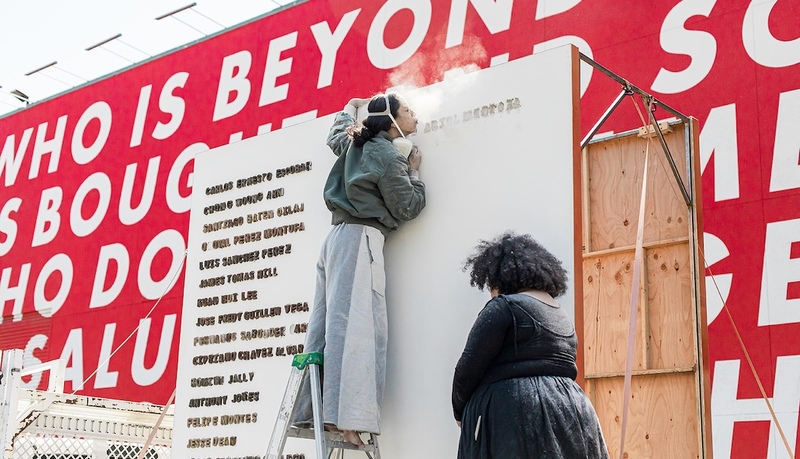
An exhibition at the Art, Design & Architecture Museum, UC Santa Barbara, of work by Los Angeles–based artist Jackie Amézquita, rooted in land-based methods and ancestral material knowledge. At its center is Gemidos de la Tierra (Wailings of the Land/Soil) (2020–ongoing), in which she hand-casts the names of people who died in U.S. Immigration and Customs Enforcement custody from 2003 to the present, each name made from soil gathered in the state where the person died, combined with masa, salt and rainwater.
Amézquita is the 2026 Artist in Residence of Ecological Practice at UCSB's Cheadle Center for Biodiversity and Ecological Restoration, and her fieldwork on campus and at the Santa Cruz Island Reserve, on native ecosystems, plant pollination and soil remediation, informs a newly commissioned work for the exhibition.
Names of people who have died in recent years are to be added during a Día de Muertos activation on November 1, 2026.
Item
Event
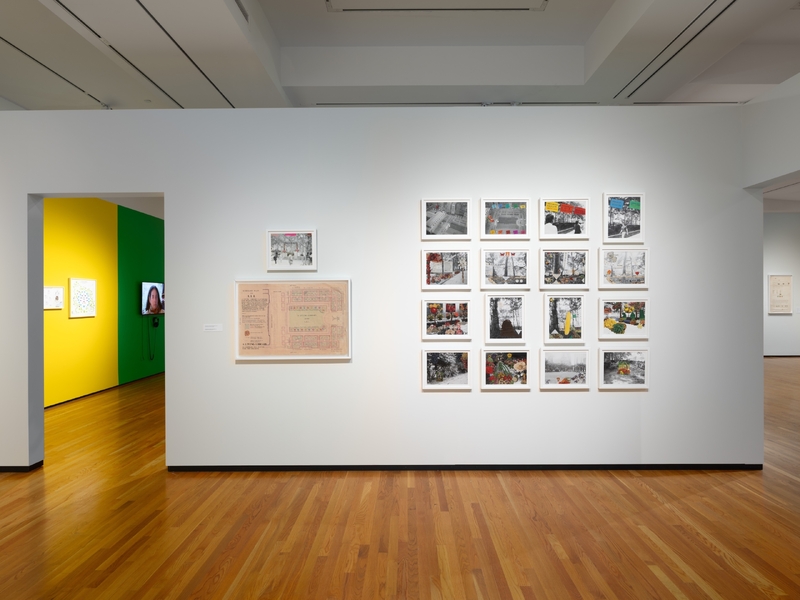
Life Frames since 1970
The first major survey of Bonnie Ora Sherk (1945–2021), an artist, environmental educator and landscape planner in the first generation of California conceptual and performance artists. It traces her work on art and ecology in public space, including Portable Parks I–III (1970, with Howard Levine), which turned San Francisco's urban "dead spaces" into temporary green environments, and The Farm (Crossroads Community), the experimental community art and ecology center she directed from 1974 to 1980 on land fragmented by freeway construction.
In this exhibition, newly transferred film and video were shown with photographs, collages, works on paper, artist books and ephemera from the 1970s and 1980s.
The exhibition was first organized by Fort Mason Center for Arts & Culture, San Francisco, and took place at the Art, Design & Architecture Museum, UC Santa Barbara.
Item
Project
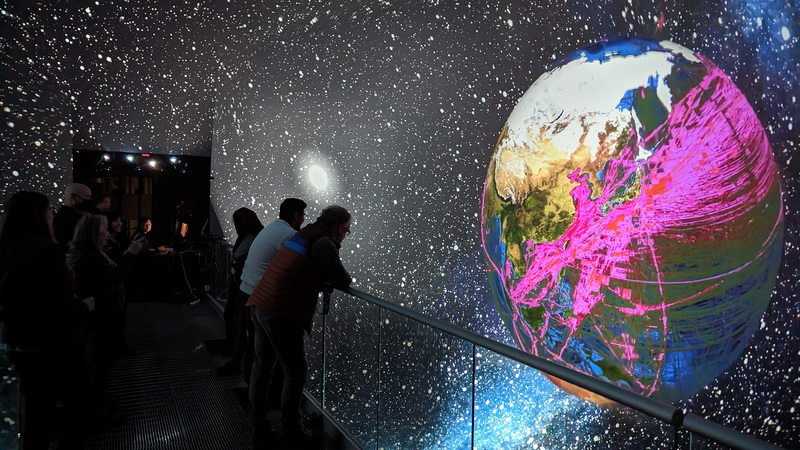
Sketches of Sensorium
An immersive installation built from core elements of Sensorium for the World Ocean, the long-term project of the late environmental artist Newton Harrison (1932–2022), directed by Joshua Harrison with Dr. JoAnn Kuchera-Morin. It premiered in 2024 at the AlloSphere, a three-story spherical research instrument in the California NanoSystems Institute at UC Santa Barbara, as a satellite to the UC Irvine Beall Center's Getty PST ART exhibition Future Tense: Art, Complexity, and Uncertainty, and ran by reservation into April 2025. With an original spatialized composition and an interactive data world, it turns climate and ocean-health data from the Ocean Health Index of the Halpern Lab at UCSB's Bren School of Environmental Science & Management into a multisensory experience, modeling how deepwater fishing, atmospheric particulates, weather, and other natural and human forces interact to shape the ocean, along with the political, economic, and social pressures upon it. True to Harrison's intent, it aims to leave audiences with a sense of hope. A project of the Center for the Study of the Force Majeure with Virtual Planet Technologies, Almost Human Media, and the AlloSphere Research Group.