-
Title
-
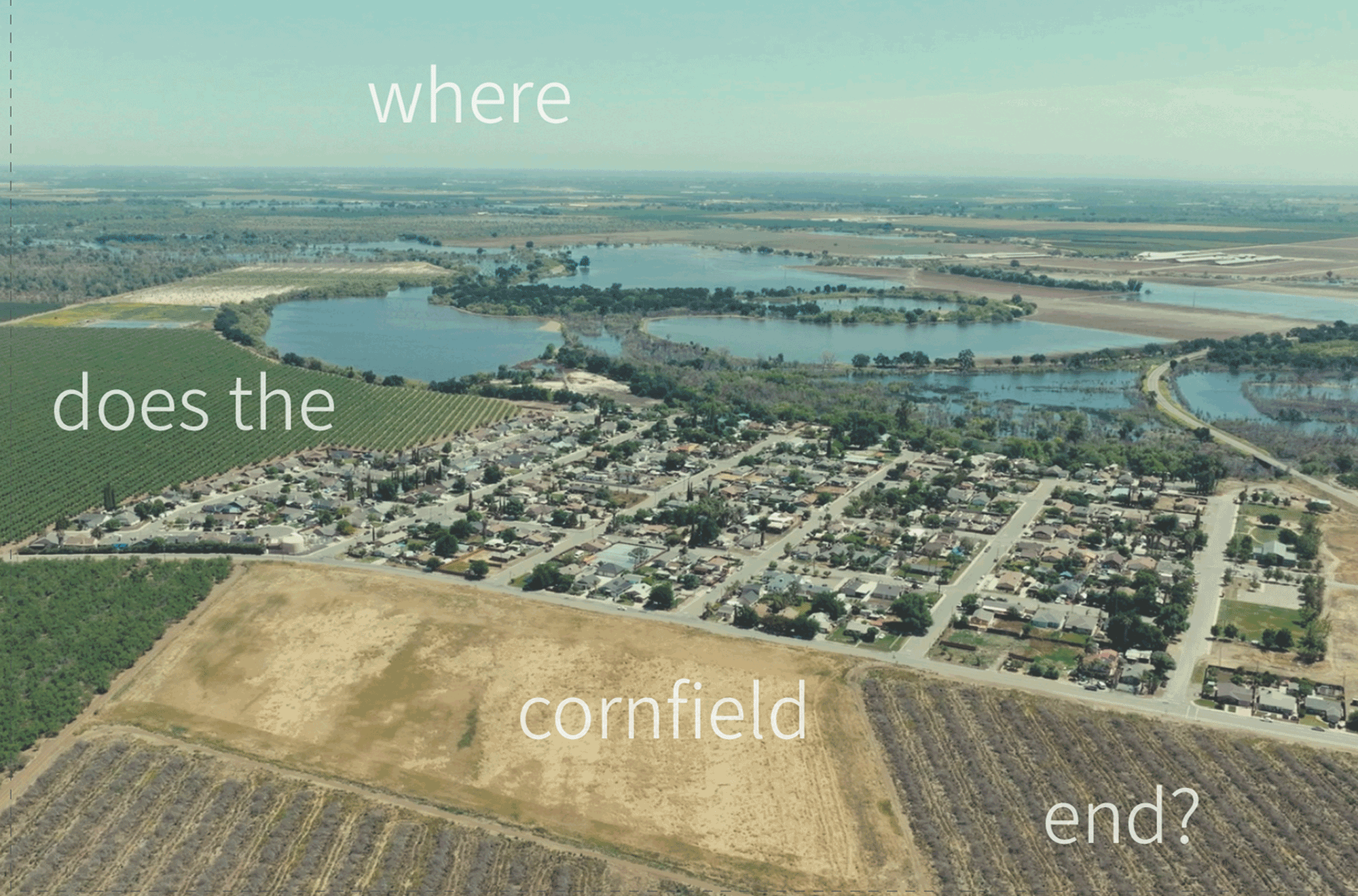
Where does the cornfield end?
-
Artist
-
Kevin Corcoran and Leslie Horwitz
-
Date
-
2025
-
Short Description
-
Kevin Corcoran and Leslie Horwitz’s multimedia installation began as an art-science study of an industrially farmed cornfield in Grayson, California. When the 2023 floods cut off access to the site, the project shifted to questions of access, biodiversity, and belonging, explored through film, sound, and participatory postcards.
-
Description
-
The project began at a diseased cornfield in Grayson, California, near where the San Joaquin and Tuolumne rivers meet. There, researchers were using environmental DNA (eDNA) to measure how a riparian buffer corridor, a strip of trees and shrubs planted along a waterway to filter runoff and support stream life, affects biodiversity around the industrially farmed field. In the winter of 2023, floods submerged the surrounding farmland and cut off access to the site. Residents and experts credited nearly 2,100 acres of nearby former farmland, largely restored to natural floodplain, with sparing the town from major damage. When the artists asked the river’s stewards for access to the land, they were told “There’s nothing there,” and the scientific research was put on hold.
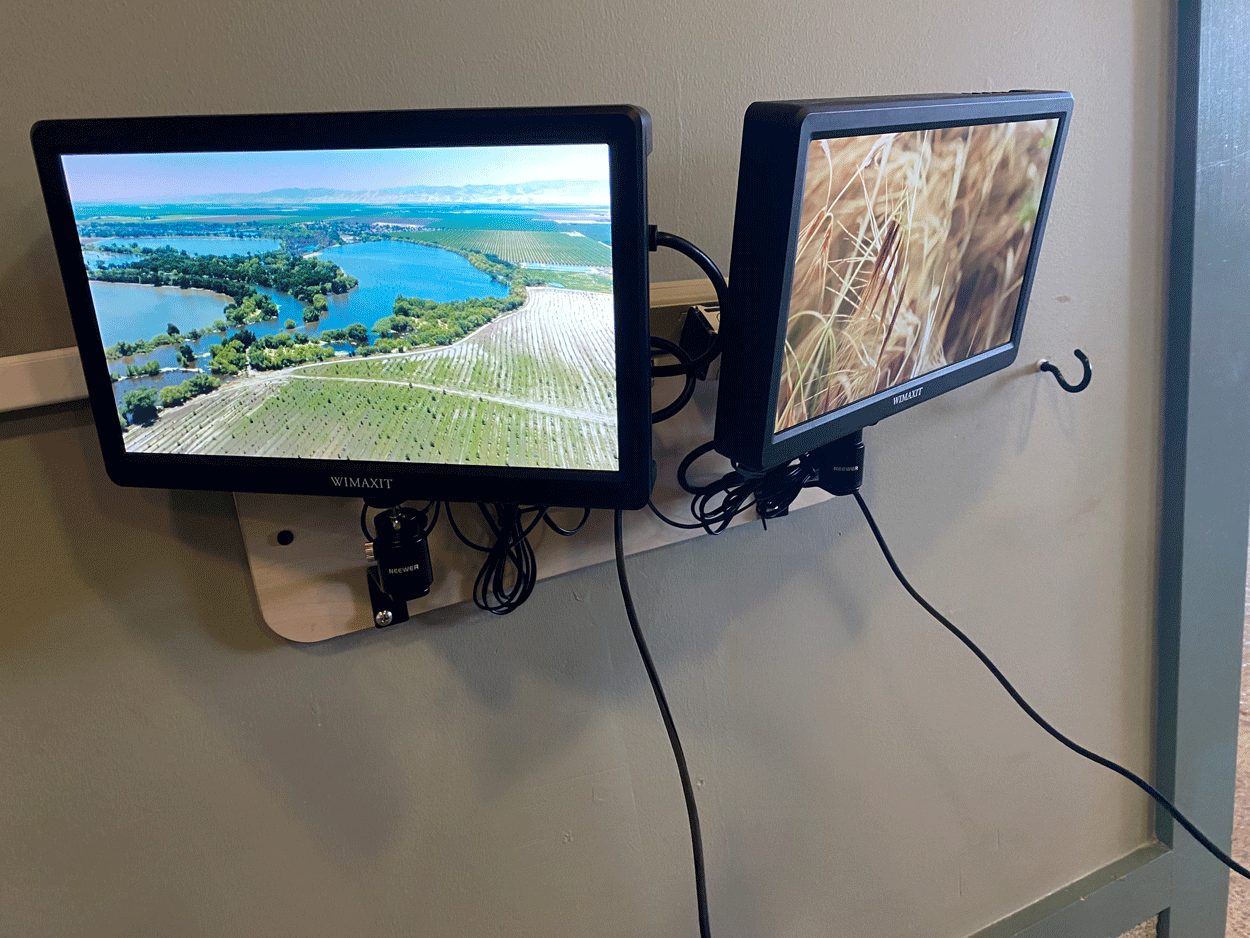
Corcoran and Horwitz turned that pause into the project’s subject: a practice of trespassing, of looking for what is present when there is supposedly nothing to see, and of letting art and science cross-contaminate. Like eDNA sampling, which reveals traces of life not visible in a single encounter, their approach works across scales. Location sound is sampled, spliced, and sequenced into a layered portrait of place. Aerial drone footage shows the rhythms of the floodplain and the marks of human-made landscapes, while high-frame-rate, long-lens photography captures life on the ground up close. The installation pairs two films as a diptych, with original scores built from location recordings and a poetic voiceover drawn from the artists’ conversations with the site. Postcards extend the project into public participation, inviting viewers to send responses back or to pass its questions on to others.
-
Artwork Type
-
Film / Video
-
Installation
-
Environmental Art
-
Social Practice Art
-
Sound Art / Field Recording
-
Materiality
-
Audio / Sound
-
Paper
-
Video / Digital Video
-
Climate & Ecology Themes
-
Biodiversity and Species Loss
-
Industrial Agriculture
-
Soil and Subsurface Systems
-
Restoration and Regeneration
-
Concepts
-
Embodiment and the Senses
-
More-than-Human Relations
-
Place and Belonging
-
Ecological Domain / Habitat
-
Agricultural / Working Lands
-
River / Stream
-
Methods & Approaches
-
Art and Science Collaboration
-
Collaborative / Co-Creation
-
Community-Based Practice
-
Storytelling / Narrative Practice
-
Audience / Engagement Type
-
Public / General Audience
-
Geographic Scope
-
Site-Specific / Single Site
-
Rights
-
Rights held by artist or creator
-
Language
-
English